“Be a Good Son While Your Parents Are Alive.”
During my free time, I like to do a lot of different things, and one of the things I love doing is watching films of all kinds, including foreign films. One of the foreign films I learned about was the movie Tokyo Story crafted by legendary director Yasujirō Ozu, which is not only hailed as one of the best Japanese movies ever made but also one of the best movies ever made. In 2012, “Sights and Sound’s Greatest Films of All Time” ranked it as one of the best non-English films ever made.
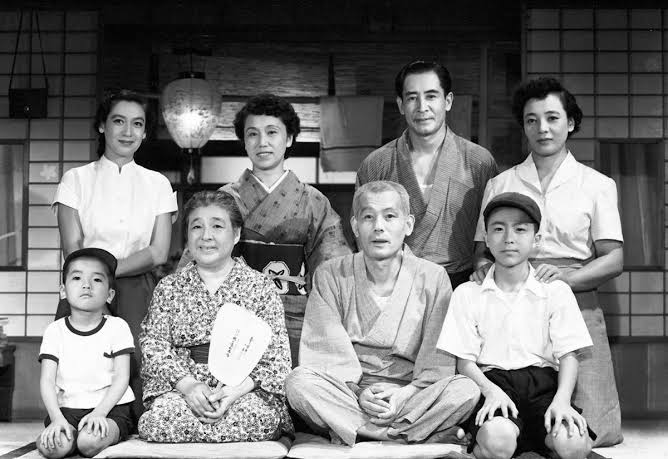
The viewer follows an elderly couple named Shukishi and Tomi Hirayama, played by actors Chishu Ryu and Chieko Higashiyama respectively, who visit Tokyo for the first time, where their two older children live, as well as their widowed daughter-in-law. Instead of a wholesome family reunion, the viewer watches Shukishi and Tomi are treated like nuisances by their son and daughter. Their son, named Koichi, played by Sô Yamamura, devotes his time to his work as a local doctor and doesn’t try to make time for his parents. In a short but illuminating scene, his preteen son complains to his mom that his dad never makes time for his family, and it seems he doesn’t even make an exception for his elderly parents who he hasn’t seen in years. Koichi then passes them on to his sister Shige, played by Haruko Sugimura, who runs a salon with her husband; she’s even more biting toward their parents. In a scene where her husband brings back cakes for her parents, Shige remarks, “They don’t need such expensive cakes” and eats them herself. Not even their own grandchildren seem particularly interested in them—in an earlier scene Koichi’s youngest son silently walks with his grandmother even as she tries to make conversation. It is only in their daughter-in-law Noriko, played by Setsuko Hara, that they find any warmth. She gladly welcomes them into her tiny apartment and even takes time off work to spend time with them. There’s no incentive for her to take care of them so warmly, considering her husband, their son, died in the war. Of course, she can’t take care of them forever, and Koichi and Shige pool together money to send them to a fancy resort, except the resort makes Shukishi and Tomi realize that the world that once welcomed them with open arms has now moved on to the youth.
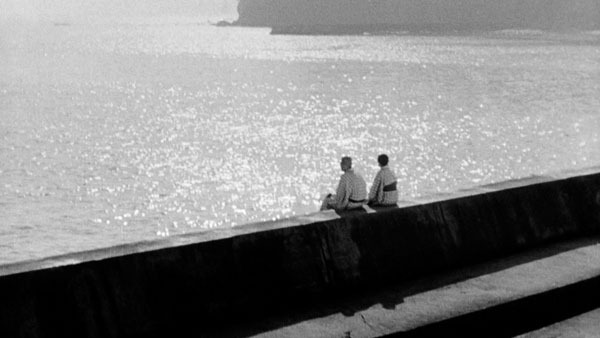
They return back to Shige’s beauty salon, where she questions why they came back, but she doesn’t have to be annoyed for long because they decide to take the train to head back home. Heartbreakingly, on the trip back, the mother dies, and it is in her death where their children’s selfishness is further confirmed. Shige crassly asks for her mother’s old kimonos, and their son promptly leaves to go back home after the funeral. Noriko is once again the only one of the three who shows care and tenderness; even the elderly couple’s youngest daughter notices this and says, “They’re selfish. Demanding things and leaving like this” and “Even strangers would have been more considerate!” The story ends with the viewer somberly knowing that her death changed nothing about the relationship between children and parent.
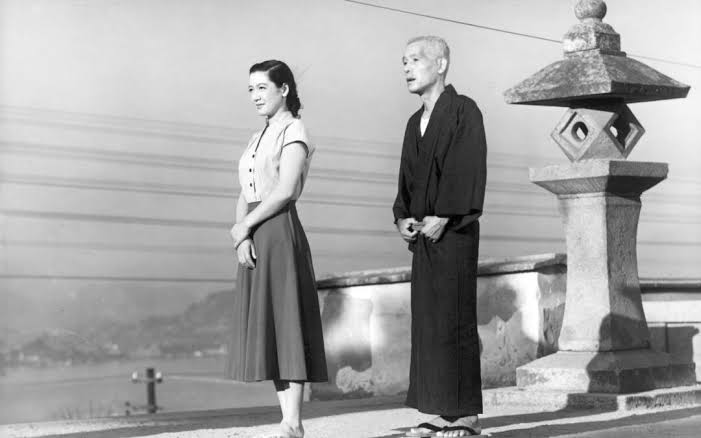
Tokyo Story isn’t a particularly action-packed story, nor is its cinematography very dynamic. Ozu’s approach to filmmaking was very bare-bones and simple compared to others, so much so that often there’s only one person in frame, and they’ll look straight into the camera. There are also often static compositions with only the landscape or a shop front, as the camera seldom tracks. However, that bare-bones and simple approach lets the story flourish. You’re able to peer into the souls of the characters, and it makes the film move beyond a simple melodrama and into something much more meaningful. The movie also came out in 1953, so the post-World War II ambience permeates the movie even though it’s never fully talked about. It is also in the actors where the brilliance of the movie shines, as it feels like you’re watching a real-life family. Many of the actors can be found in Ozu’s films with similar themes and ambiences, such as Tokyo Twilight, where Hara and Ryu make similar appearances. But beyond just stilted family dynamics beautifully portrayed, the movie is also about change and what it means to live through change. As I mentioned earlier, Shukishi and Tomi feel uncomfortable at the resort because of the air of youth. They are trying to navigate the new world of Tokyo that has rebuilt itself from the ashes of WWII. It can be difficult to watch the world change in ways you didn’t expect, especially when you feel like you’re being left behind. For older members of society, the easiest and best way to experience change is through their progeny, but when your progeny treats you coldly and you never see them, you’ve lost that mode of transportation into the modern world, and that’s exactly what happens to the elderly couple. It’s a timeless story that’s able to elicit strong emotions from you. More than anything, this movie reminds us to take care of our parents and cherish the time we have with them because time creeps up on us all.

