Did you know there are people that only listen to music in one language? They choose not to listen to music in other languages because they can’t understand it. They always say the same thing: why would I listen to it if I don’t understand what’s going on.
Here’s what I think: music is universal. It doesn’t matter if you can’t understand the lyrics. Music is something that you feel. You can feel the emotions of a song even if you don’t get the words. In the end, do lyrics really matter if you like the sound of a song? Even if lyrics are really important, in this day and age it’s quite easy to look up the translation of a song. When you do that you’ll find a treasure trove of beautiful messages. It really is that easy.
All my life I have grown up listening to music in a variety of languages. From Spanish to Thai, you name it. I’m always open to new music and languages. I’ve discovered some of my favorite music just by branching out and keeping an open mind. It’s also a great way to discover different genres of music, instruments and artists.
Who knows? You might be one language away from finding your favorite artist.
Listening to music in foreign languages also allows you to immerse yourself in other cultures. This in turn broadens your worldview and challenges your existing beliefs. It’s also a useful tool for language learners!
Music is an incredibly important part of most cultures. It truly connects us in a unique and powerful way.
In March, the Japanese department hosted an onigiri workshop open to any student taking a Japanese language course. We made and ate onigiri (おにぎり)!
Onigiri is believed to have originated in the Yayoi period, approximately 2000 years ago. Originally, the rice was shaped into balls and served as easily transportable snacks for travelers and soldiers. During the Edo period (1603-1867), people began wrapping the onigiri in seaweed, a feature commonly recognized in the onigiri today. During this time period the triangle shaped onigiri we’re familiar with now became popular.
In the workshop we made furikake onigiri which is made by mixing rice with Japanese seasoning called furikake. There was also rice mixed with red shiso or perilla leaves. Both were very good. The rice was already made when we arrived. All we had to do was shape the rice into a triangular shape and wrap it in seaweed. It sounds simple enough but getting it perfect can be a little hard. It was still very fun!
Onigiri is often made with a variety of fillings including salmon, umeboshi and tuna. The onigiri often sold in convenience stores in Japan usually have filling in them. My favorite filling is tuna mayo. I probably had at least one onigiri every day when I was in Japan. I had the chance to try onigiri from convenience stores and restaurants. Honestly, both were incredibly delicious. It really is the perfect snack: easy to carry around, eat and it’s good.
The workshop was really fun! Now I’m really craving onigiri!
In February, I had the opportunity to attend a calligraphy workshop hosted by the Japanese department. This event was open to any student taking a Japanese language course. Coincidentally, this event came at the perfect time. This semester the topic of one of the chapters my class went over was Japanese culture and customs.
Calligraphy or 書道 (Shodo) is an art that has been used and adapted for centuries in Japan starting in the 6th century. It has Chinese origins and has developed into a unique art form that is practiced across the country. The name 書道 consists of two kanjis (Japanese characters): 書 meaning writing or to write and 道 meaning way or street. Literally translating to “way of writing.”
When practicing calligraphy, four things are used: a brush, ink, inkstone and paper. Brushes can come in all shapes and sizes. There are also several calligraphy styles including Tensho (ancient seal script) and so on. In the workshop we didn’t go over any particular style. We were just encouraged to start.
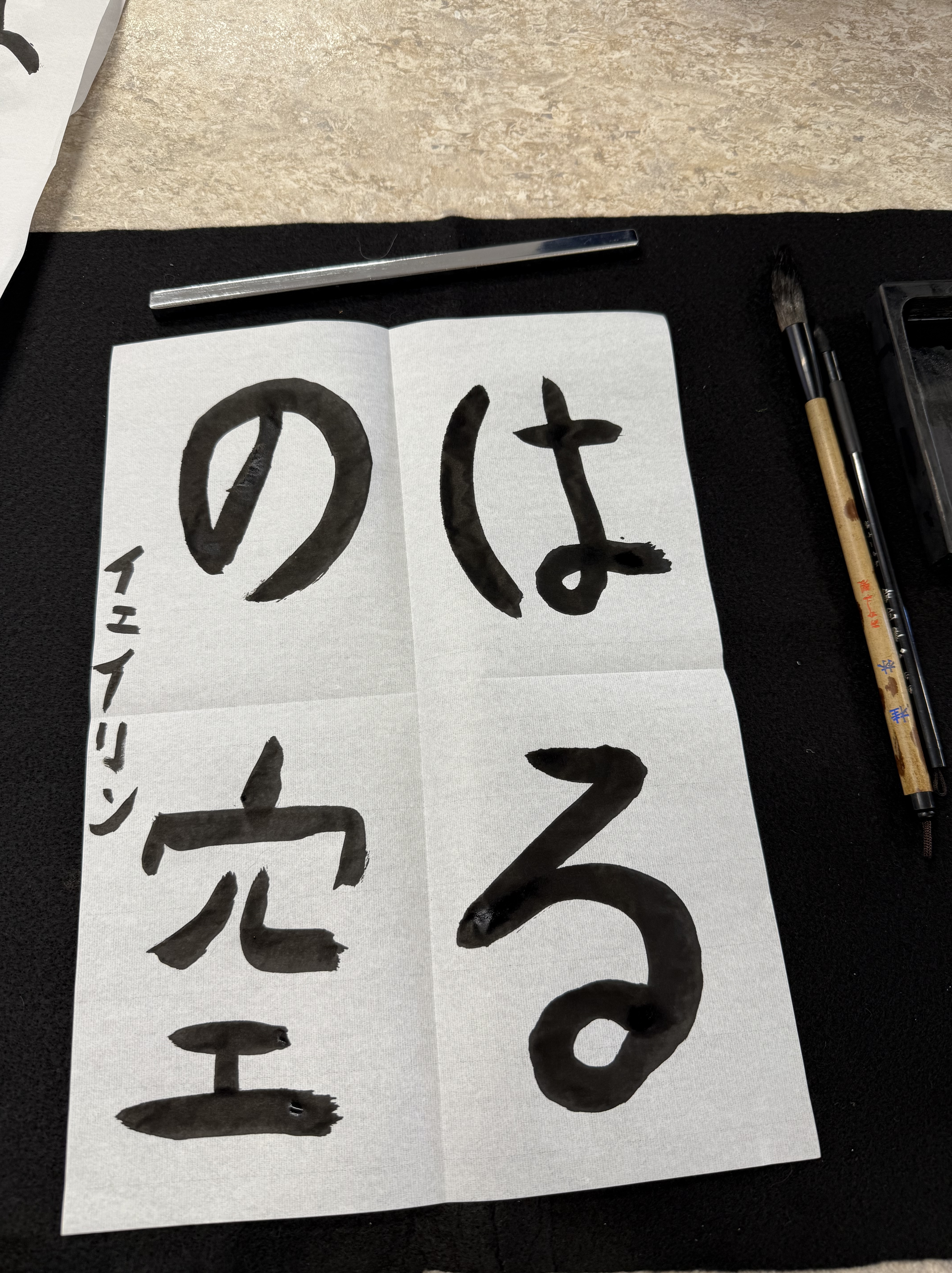
I will admit, it was very challenging. Calligraphy can take years to master and even then you continue to learn over the course of your life. That’s why it’s called the way (or path) of writing! The hardest part for me was applying the right amount of pressure to the brush to get the stroke correct. My finished product was not the best but it was definitely legible.
The characters we wrote were はるの空 (haru no sora), meaning spring sky. We also wrote our names, in katakana, in smaller writing on the left. Katakana is the alphabet usually used for foreign words.
I’m so glad I had the opportunity to attend this event. It was a challenge but it was also really fun! I’d love to do it again and I recommend trying it at least once!
My third year at OU, only the 2nd time I have found out about the AASA Lunar New Year Celebration at the last minute. Somehow it crept up on me despite the fact that I always go and I started talking about Lunar New Year in December. At my friend Fiona’s house over break we discussed the year of the horse, which is her sister’s birth year. Her mom read us some nice Chinese proverbs about the horse, but we pressed her to find good ones about the monkey, which is our birth year. Whereas the horse proverbs read “When a horse arrives, instant success”, sayings referencing monkeys seem to have lower praise. Some memorable ones for me: “Monkey head monkey brain” and “When the tiger leaves the mountain, the monkey calls himself king”.
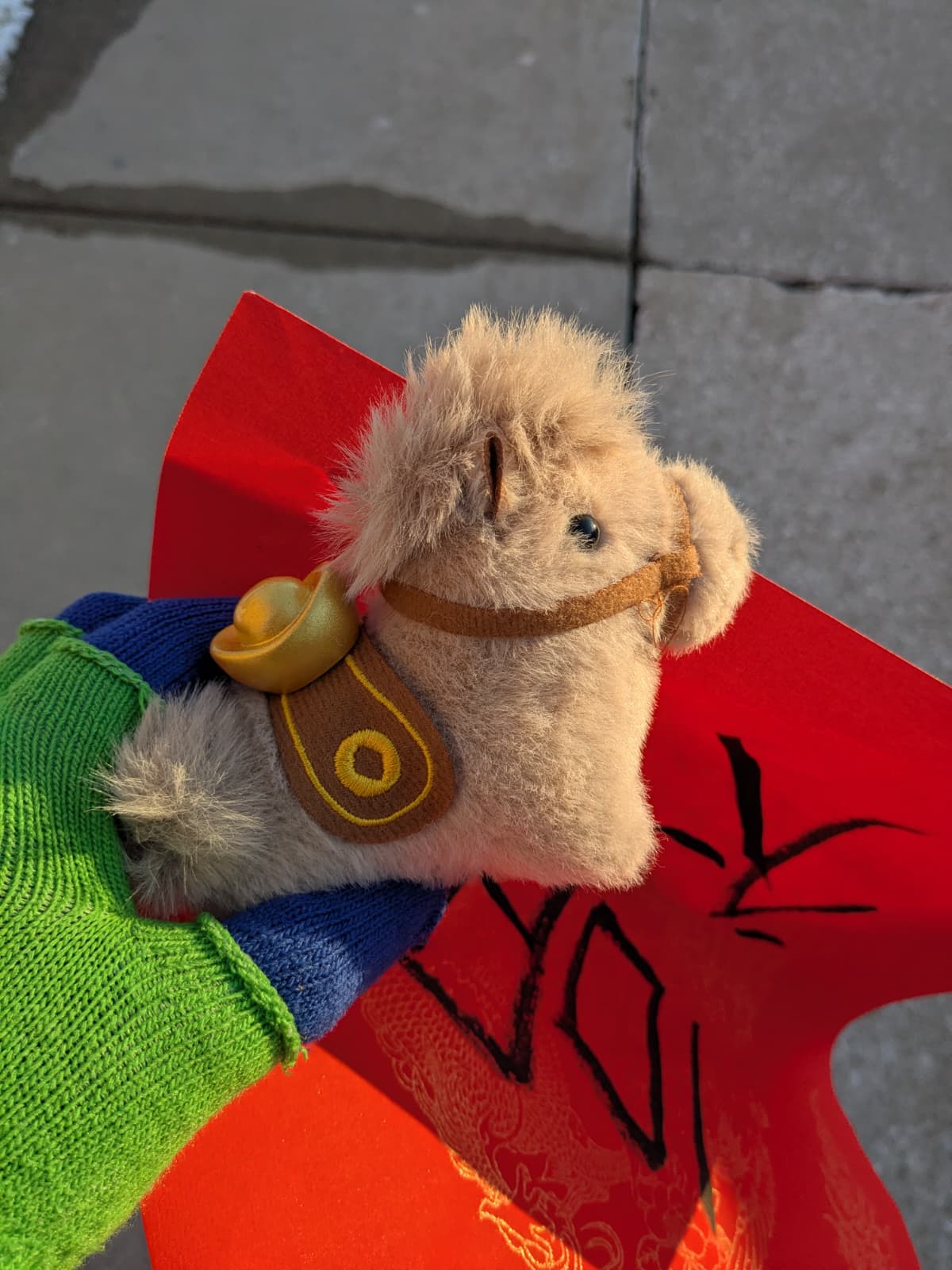
Fiona celebrated at UMich already, and sent me this picture a few weeks ago. She said she spun a wheel and answered a riddle to win it an Asian Student Association activity.
I am here to write this blog post for all my dutiful fans ( my friends know about this blog but very few of them have looked to find it, they feigned outrage when I said none of my posts were public anymore.) and for future me, who would find it easier to write about events sooner after they happen.
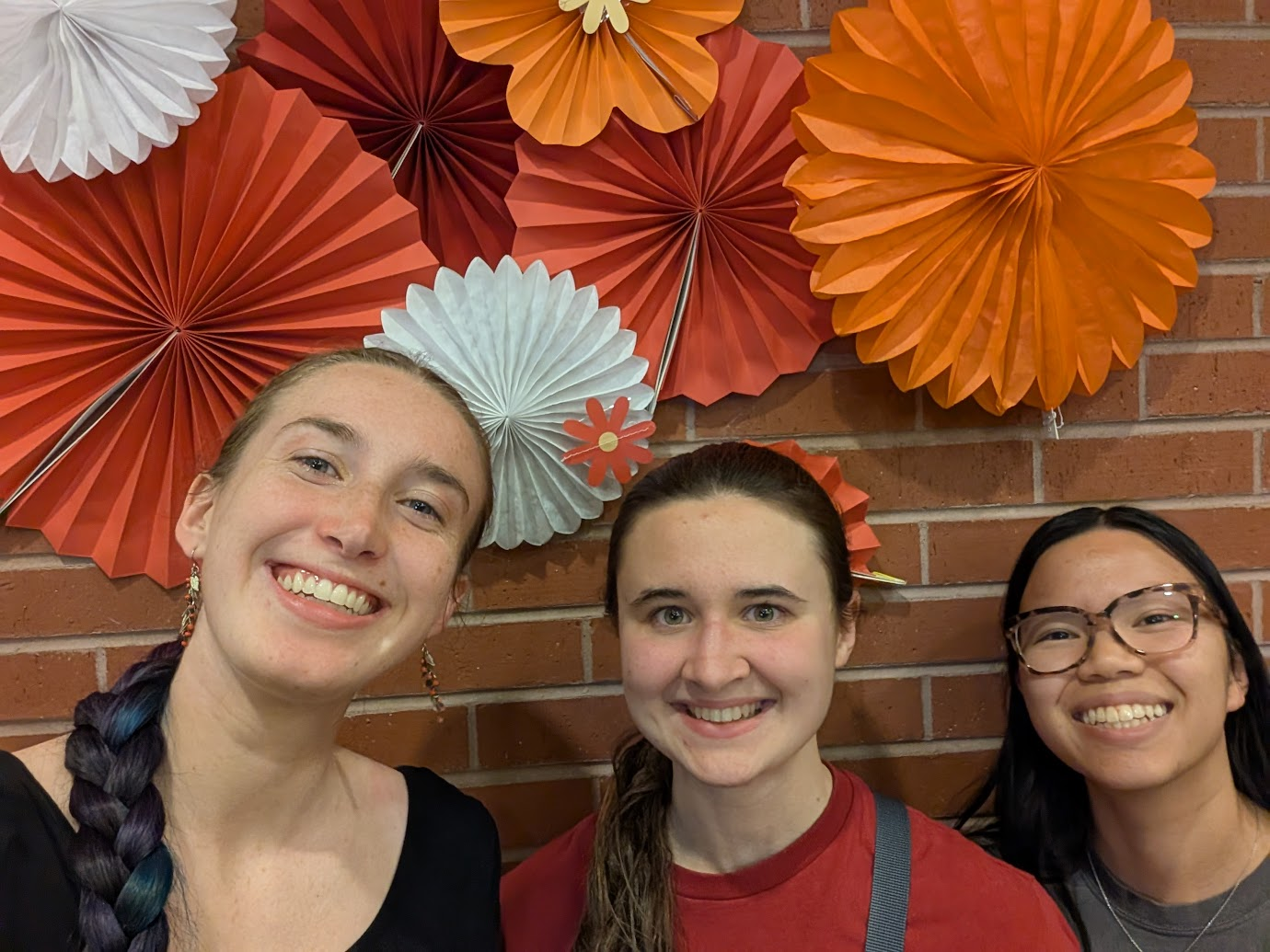
My friend Savanna and I planned to go, and at the last minute I convinced my friend Logan to come as well! It was great to have them with me to mill around.
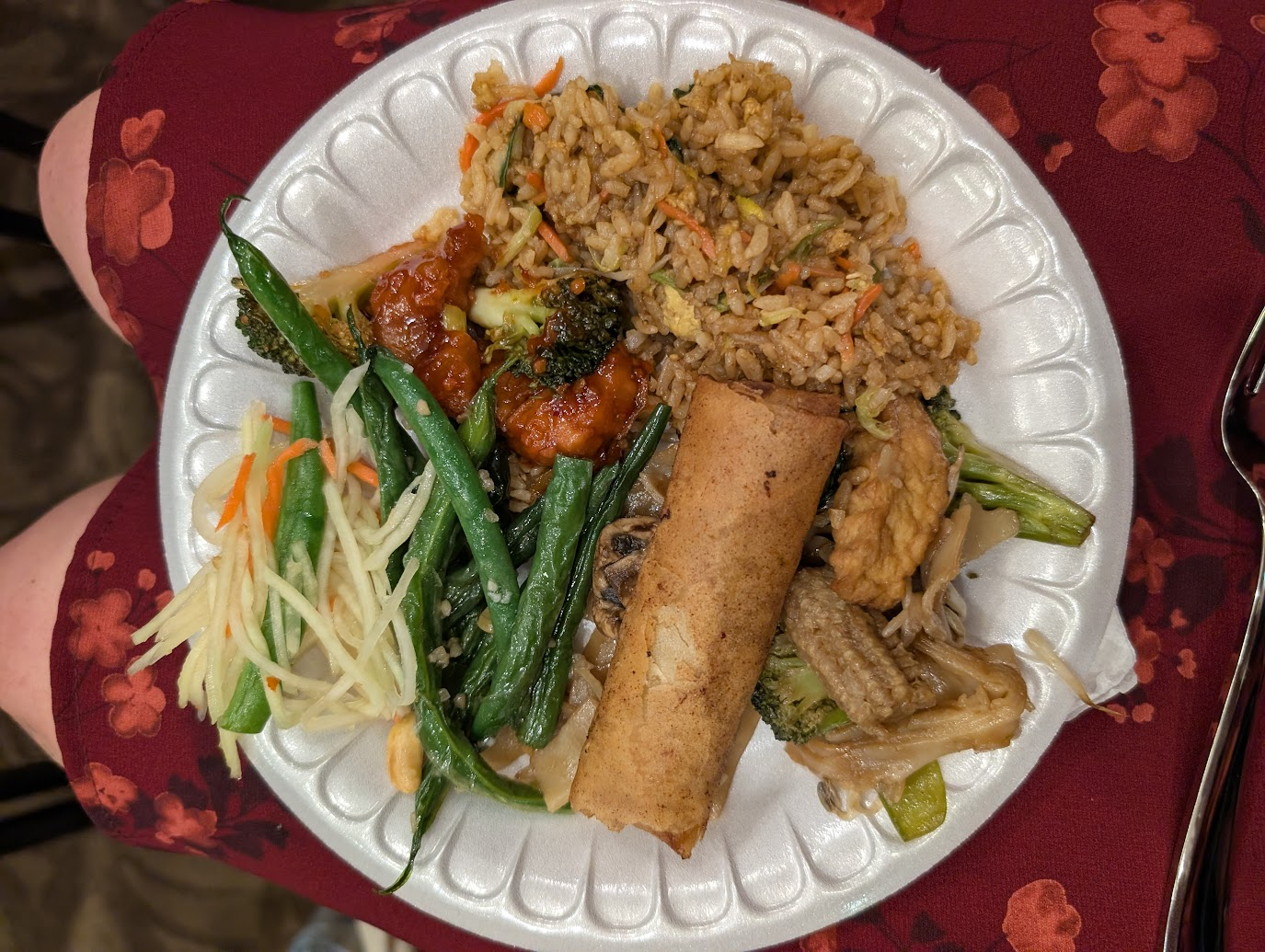
Every year I get here super early and just have to wait for the food and performances, so I went up to the Tapioka magazine booth again. At the booth we pestered Erik, the creative director and later MC, about the magazine. Last year the guy at the booth was really confusing, so it was only in the last 5 minutes of talking to Erik that it was clear the magazine was not actually in print physical copies. Also I don’t think he had read it himself. It is really cool that students can come together to make something like that, and he said they did get money allotted to them from the AASA this year to print and distribute some magazines, which is cool!
After half an hour, we got food, sat down and I noticed the girls behind us were speaking German. I summoned all my courage and the deep knowledge that if my mom were here, she would have 10000% have made me talk to them, and turned around and asked, in German, if they were German. This sounds stupid but it is a super easy way to indicate that you speak it, and it IS always possible they are from Austria or something! I talked to them a bit, asked why they were here (study abroad), what they were studying (to be teachers), and they said they had met one of the German instructors, Frau Preuss, also because she had heard them speaking German and came up to them. It wasn’t the longest or greatest conversation because the room was loud and I had to turn fully in my seat to speak with them, but I’m glad I did it and I never have to wonder what could have been…
We stayed for the dance and musical performances, unfortunately there were pervasive microphone technical issues, but the performers were all great! I never entered in a raffle, and I vow to make sure I do and to be able to stay until the very end next year. Happy Year of the Horse! Instant success!
 Global Engagement Fellowship