Nausicaa And the Valley of the Wind: Why you Should Read Miyazaki’s Epic Manga

The Inspiration for this Post/Fun Cultural Analysis

For my Honors Perspectives class, we got to write an essay analyzing how a scientific concept was developed in a work of literature, and how it spoke to cultural anxieties at the time/emerged from the culture of a place. Stupidly, I decided to do mine on the entire epic manga series, Nausicaa of the Valley of the Wind, By Hayao Miyazaki, which is 500+ pages.It is definitely one of Miyazaki’s lesser known works, most people know only about the Nausicaa movie. I would argue that the manga expands on that world amazingly, both thematically and narratively.

I wrote in my essay about how Miyazaki was influenced by folk Shinto animism in writing the character of Nausicaa, but how many other commentators persist in seeing her as a Christ figure despite this, and so she stands as an interesting blend of cultures depending on how you interpret her. There is just so much to analyze in this manga, so hence I thought doing a short summary/book review would be cool.

A Short Introduction to the Manga (No Spoilers) is as Follows

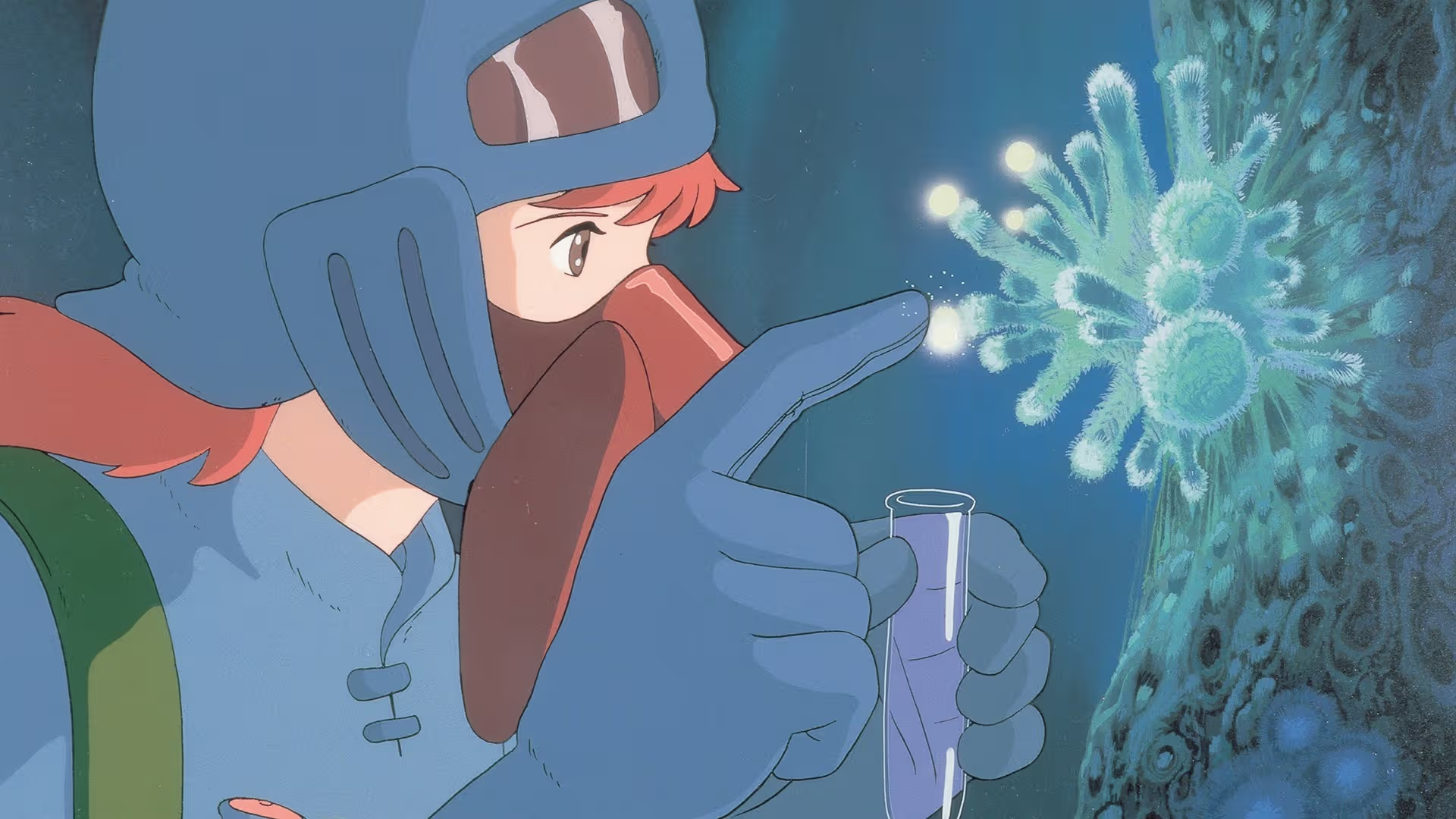
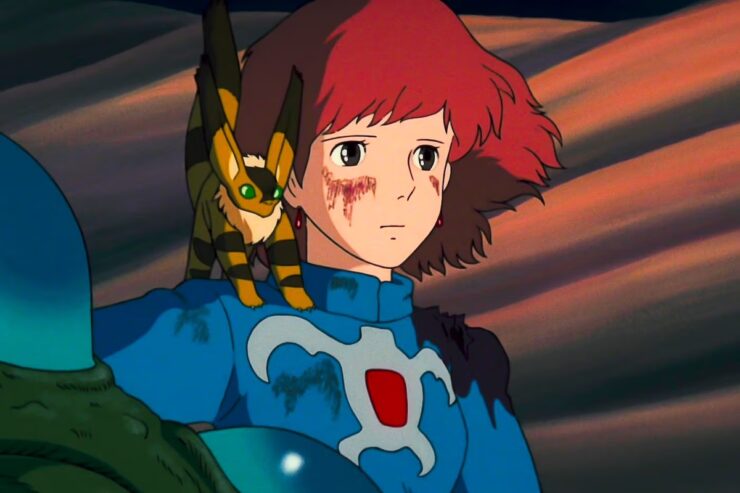
After the seven days of fire, where the giant god-warrors (thought by many to be emblematic of nuclear weapons) razed human civilization to the ground, a toxic jungle sprung up, many theorize, based on the toxins that leeched into the soil after the use of these weapons. Civilization exists now only at the fringes, with an odd mix of old and new technology, always under threat from the poisonous spores or giant insects that live in the jungle. Our story follows Nausicaa, princess of the valley of the wind, who is a bit of a scientist, and often goes into the toxic jungle to collect spores. Her empathy for all living things leads her not to fear the jungle or its insects, but she is often grieved by the conflicts between humanity and the forest, and we get to trace the development of her character as she grapples with this idealism in the face of war and apocalypse.

Reading this made me want an entire Nausicaa show in the style of the movie, because there’s so much great story in the manga, and it’s really not that well known.

Review/Why You Should Read it

What struck me most about the manga was just the insane amount of worldbuilding in it. Some have tried to paint Miyazaki as more of a “soft worldbuilder” by which they mean that his settings serve more of a thematic purpose than a “realistic” one, but it is not for lack of skill in “hard worldbuilding”. There are no less than three separate political entities in the Nausicaa manga, the Dorok people who are ruled by a holy emperor type figure, the Torumekians who are ruled by an emperor, but whose empire is splintered among the competing members of the royal family, the people of the valley of the wind, who serve as kind of a vassal city-state for the Torumekian Empire in exchange for their independence, and several other smaller entities that come into the plot occasionally. To say nothing of the people living in the toxic jungle that we meet later in the book, or the interesting Dorok theology we get through a Dorok priest character that eventually becomes friends with Nausicaa.

Cool Translation Note

What was also interesting to me about the manga was that, while the words were translated from Japanese, the sound effects were not, given how heavily stylized they were. There was of course a glossary in the back of the book, but I honestly just ended up making my own sound effects based on the context of the panel. It made me think of my world literature class when we were talking about how a lot of translation is an act of trust, you have to trust that the translator was committed to their work in good faith.

Conclusion

In conclusion, the Nausicaa Manga is an excellent read if you’re a fan of science fiction, post-apocalyptic fiction, ecological fiction, or just fiction in general because it is a really cool story, and it should be essential reading if you’re a Miyazaki fan. Thanks to my Honors Perspectives professor for the inspiration, and I hope you enjoyed reading my mildly disconnected review of a book series I’ve been into recently.

Reflections on My ISSA Membership – Spring 2026

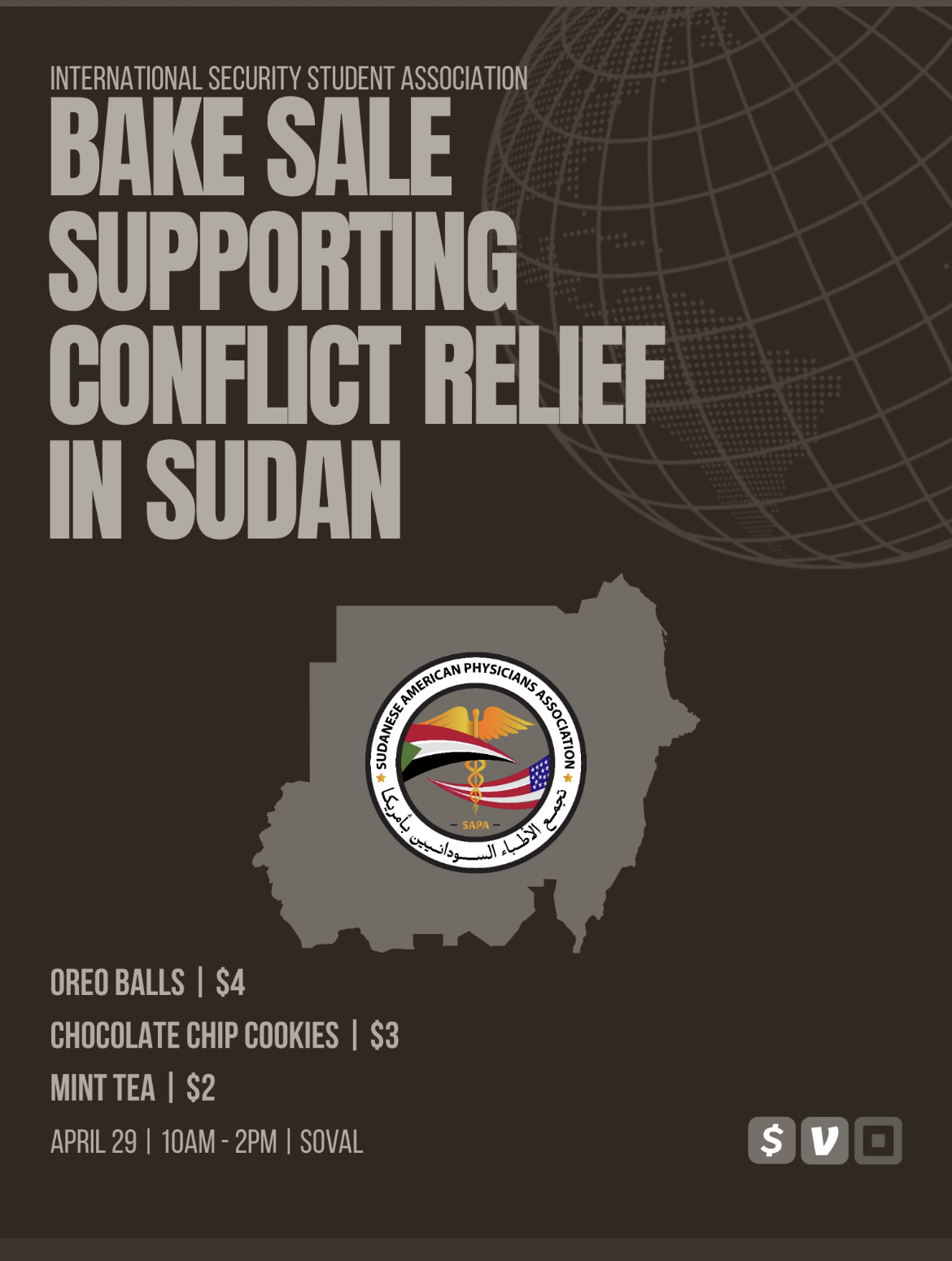
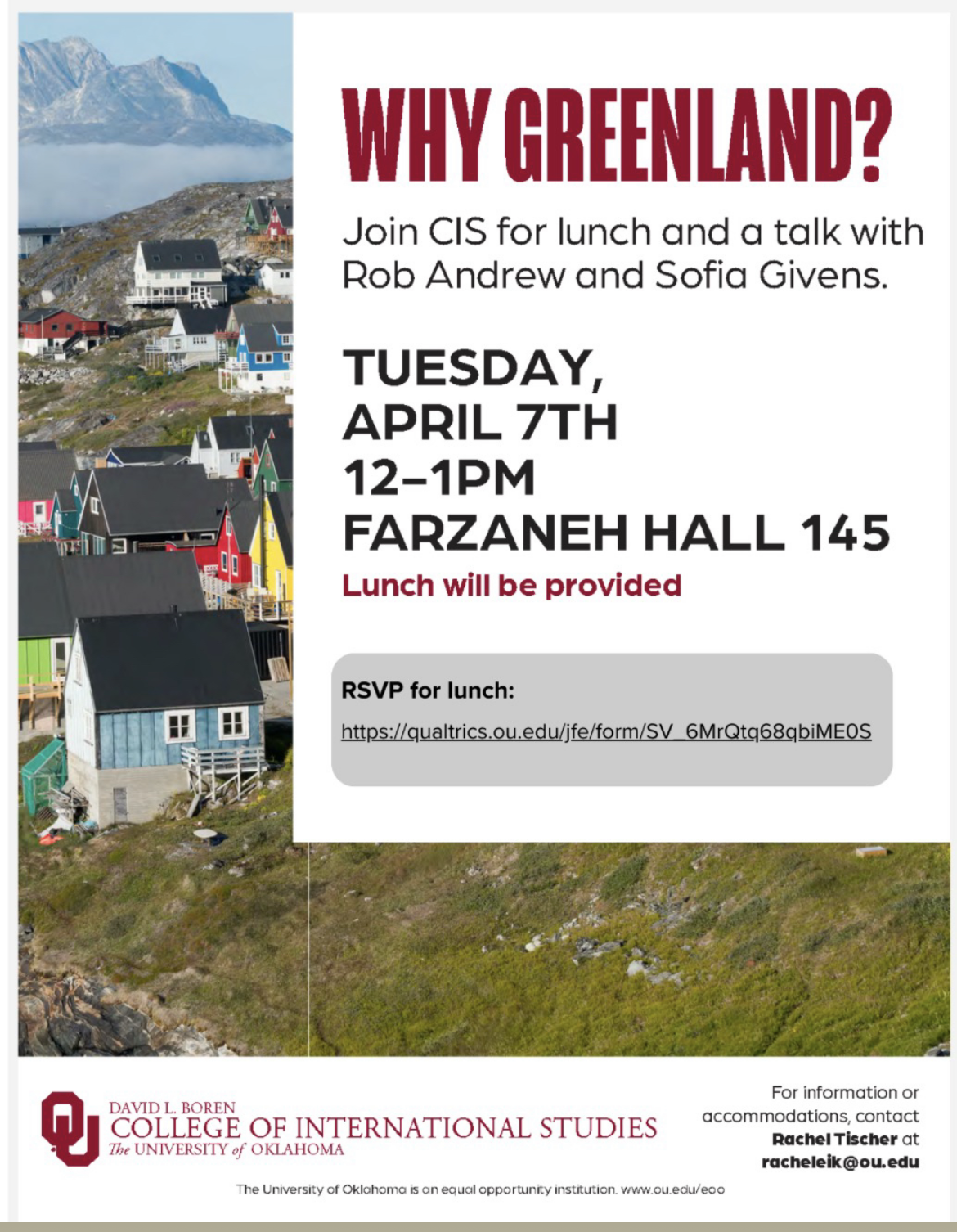
Alas, due to a scheduling conflict this semester, my attendance at ISSA was not what I would have liked it to be. However, I did attend three events either hosted or promoted by ISSA, flyers of which are depicted below. Overall it was a good experience for me, leadership honestly seems to me made up of really cool, smart people. I used to be in debate in high school, and we would do a lot of research on how specific policies would affect the international landscape, so hence my interest in this sort of topic. The intersection of one of my majors with one of the events (the discussion of the U.S treasury market) was really interesting to see too.

A Personal Anecdote

The “Why Greenland” talk somehow ended up being the most intimidating event out of all of these. To set the scene, all of these CIS professors were sitting there in business casual and talking about international politics, and otherwise the room was mostly full of middle-aged adults and upperclassmen. Cue me in my wolf t-shirt and black jean jacket, taking fervent notes like some kind of amateur journalist, nodding very coolly along, and going “I researched arctic oil drilling in high school debate! Who knew it would be so applicable!” I kid, it was a really well-researched and interesting event, I just felt a bit underdressed while it was happening.

Other Events

For the bake sale I mostly just swung by after class, but you can see kind of what it was about on the flyer above. And see my other blog post for my thoughts on “The End of Exorbitant Privilege”

That is a brief summary of my ISSA participation this semester, and I look forward to continuing my membership/attending interesting events next semester as well.

Persian Classical Music Workshop: Reflections as a Non-Music Major

World Lit Fest

I went to this event on a whim because it sounded interesting, only to realize that most of the other people in attendance were music majors, who nodded knowingly when the speaker talked about “tonicizing” notes, and tetrachords. Thus I would like readers to bear with me, and apologies to the great speakers and musicians at this event if I accidentally get things wrong/misrepresent things said due to my lack of knowledge in this area. As you read this text, bear in mind that I am a “layman” when it comes to music, my only experience being two years of playing violin in middle school. These are my notes/a brief summary of the event.

Iranian Music Structure

Music originated in Persian Empire —–> Originally much bigger than Iran today

Persian literature/poetry is inextricably linked with music, for example poets like Rumi, Hafez, Saadi were very influential in its development. The rhythmic structure of the music is connected to the poetic meter, which is non-metric, and not beat based. Therefore the structure can sound “irregular” to ears unfamiliar with this history, but that sound is actually a poetry-driven music structure.

Rhythmic Norms

A different meter is typically used for a lot of Iranian music. Drawing on my maybe two years of experience playing violin in middle school, in western classical music you see a lot of 2/4 and 4/4 meters, which are 2 and 4 beats per measure respectively. Globally a lot of different rhythm structures are used. In Iranian music specifically you see a lot of 5/8 , 7/8, 9/8, 10/8 and 11/8. The speaker told us that 10/8 and 11/8 were actually used in Mission Impossible for that feeling of action/urgency. We were shown different ways of writing these notations, for example 5/8 can be written as either 2+3 or 3+3, and I have no idea if this is some advanced music thing I’ve never learned or if it is a unique notation to Iranian music, but it is in my notes.

Dastgah System

The whole scale structure is called a maqam, and there are things called dastgahs that are more concise maqams/standardizations of maqams that go together from my understanding.

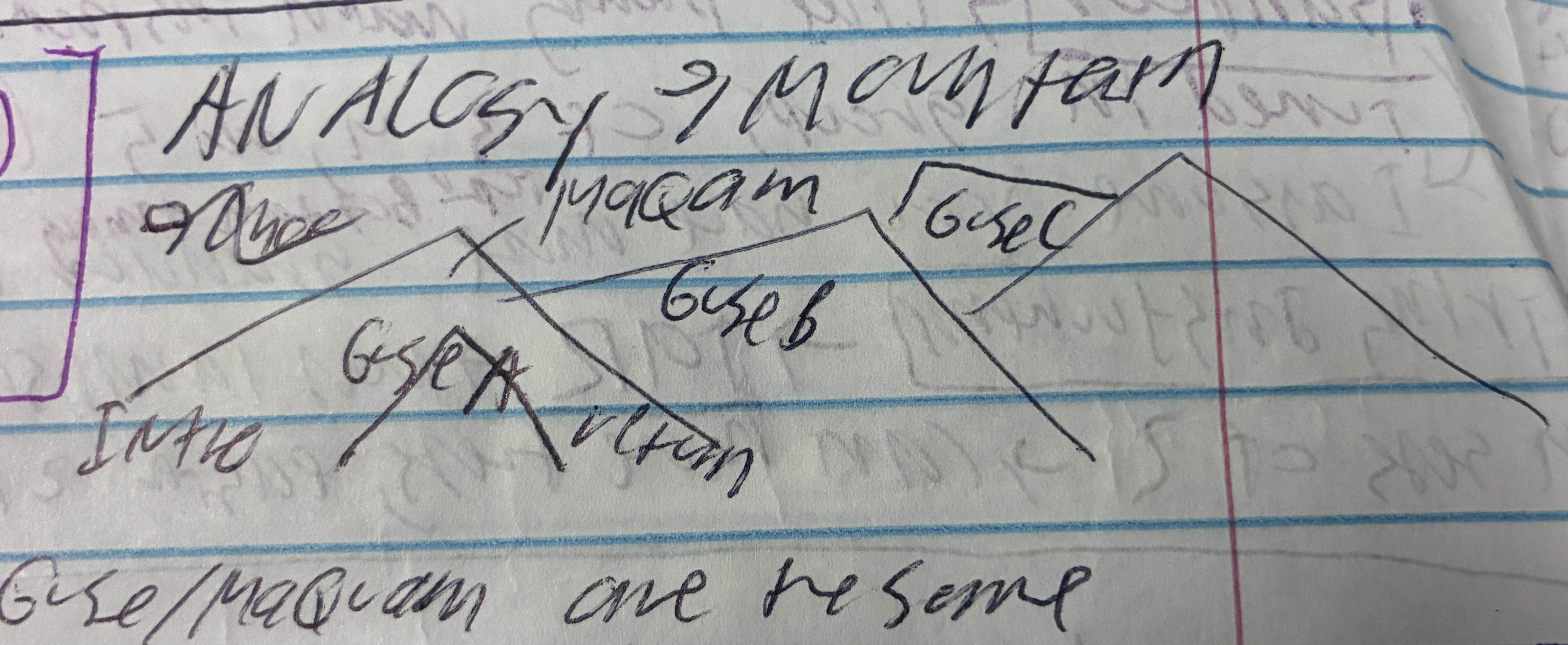
The analogy used to explain dastgahs to us was that of a mountain range. Basically there are three aspects to a dastgah, the intro (base), body, and conclusion. But you can jump up and down different mountain peaks depending on what guse/maqam you’re using. Thus I think this is what the speaker meant when they said that there are “rules for improv”, you’re either going up and down one mountain or jumping up to another or going back down to the base to end the song.

A better picture of a drawing I made to convey this is shown below. The sense I got was that one jumps between different sets of scales that go together basically, up and down the mountain range.

Thus for a mountain “station” one moves around tetrachords, but descends back to the “base” of the mountain or lower scale at the end.

Traditional Instruments

After the main music workshop we learned snippets of the history of traditional Iranian instruments/their development. Unfortunately here my notes become really fragmented because I ran out of paper and starter writing them in the margins of my economics notebook, so you will have to trust me on this.

This was the flyer for the event that I found online, the other people that spoke at the workshop were Hamed Erfani (composer-in-residence for the Oklahoma Chamber Symphony) and Hossein Khaleghian (oud/sitar)

Main Speaker

The main speaker of the event featured on the flyer also came up after the music explanation part of the workshop and gave a brief talk on the poet Rumi. From my notes I have that Rumi was an Islamic theologian until a vagabond asked him to come see the world with him, and thus Rumi learned about “deep listening” and the “whirling dance”. The speaker said that tradition says that the “music overtook him” and that’s how Rumi became a poet. Apologies to the speaker if I’m not doing that story justice, my notes are, as noted previously, very fragmentary.

Conclusion

That was a summary of my experience attending the Persian Classical Music Workshop at the Puterbaugh Lit Fest this April. It was honestly a really cool experience despite some of the music jargon maybe going over my head a bit. I learned about it through an extra credit opportunity in my World Literature to 1700 class, and thought it wouldn’t hurt to go check out. Thanks to the organizers of the Puterbaugh Lit Fest, my world literature professor, and all the speakers at this event for this experience. I hope that I’ve passed on just a bit of what I managed to learn about Persian music/poetry from this blog post, and if any errors exist they are mine and mine alone. As previously stated, I am a musical layman, who took rather fragmentary notes on this whole experience.

International Politics, Debt, and the U.S Treasury Market: An ISSA presentation

Photo by Monstera Production on Pexels.com

A Fascinating Glimpse Into International Economics

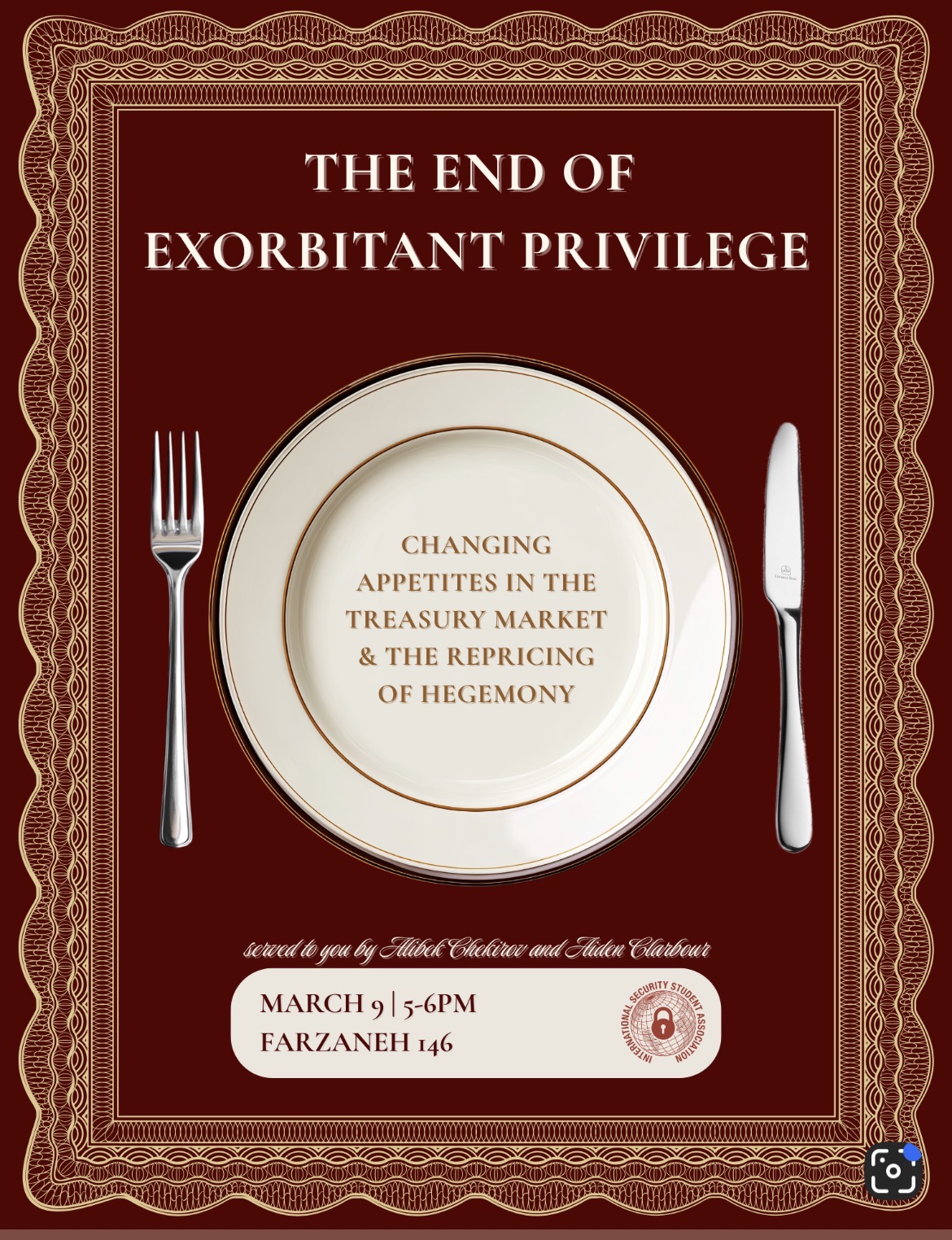
This past semester I had the privilege of attending an event held by ISSA, titled appropriately enough, “The End of Exorbitant Privilege: Changing Appetites in the Treasury Market and the Repricing of Hegemony” It was a really fascinating look into the international credit rating system/debt market through the lens of economics, which I appreciated being an econ major myself. Thus I thought I would summarize some of the key points/add some reflections in this post. Credit where credit is due to the ISSA team for the thumbnail on this post as well, the flyer was so well produced I couldn’t resist.

The World of U.S Privilege

Summary/Key Points

The U.S has run a deficit w/their national debt pretty much every year since the 70s

As counterintuitive as this seems, the U.S gained a lot of power from doing this. Running a deficit allowed us to become a “safe asset” in the global treasury market. What this means is that our debt was pretty valuable since we’ve never defaulted on it

Advantages to being the Safest Treasury Asset

  • The U.S got to borrow cheap
  • We could run deficits without crises —-> No one else (except Japan) can do this without dire consequences
  • Allows the U.S to project international power

Why Hold U.S Treasuries?

They were safe, very liquid, and convenient. Regarded as “absolutely safe”, despite their low yields, which I am told countries love when they are building their international portfolio

“Mars Factor”

Also 50-60% of U.S assets were bought by U.S military allies, the deal was we protect them and they soak up our debt

The End of That World/ Why the U.S is Losing that Privilege

2022 Watershed – Russia’s Invasion of Ukraine

My understanding of how asset freezes work is that when the U.S sells people treasuries they maintain the ability to freeze them at any time. Previously, asset freezes were only used against small countries, but in 2022 with Russia’s invasion of Ukraine, we saw asset freezes being used by the U.S against Russia, on a scale larger than anyone had ever seen before. This introduced the idea of “custodial risk” when buying U.S treasuries. If you’re a country that might end up opposed to the U.S buying treasuries could be a bad move because you leave yourself open to sanctions/asset freezes.

Increasing U.S Debt to GDP Ratio

Our national debt is out of control and it is starting to also affect our international credit rating, which doesn’t help things on top of the new “custodial risk” to buying U.S treasuries.

“The U.S spends 970 billion dollars just to on the interest for previous debt, not even including the debt itself. The defense budget, famously huge, is sitting at 900 billion.”

Paraphrase of ISSA’s presentation based on my notes

Signs of the U.S Losing this Market Dominance

The U.S has been downgraded by several international credit rating organizations. For names of these credit agencies, S&P, Fitch, and Moody’s specifically have downgraded the U.S, spanning from 2011-2025. For an idea of the type of downgrade, S&P moved the U.S from AAA to AA+, which is still good, just not where the U.S probably needs to be to continue tanking its increasing national debt with no ill effects.

Optimistic Caveats

Whether you think that the end of the U.S’s economic hegemony is a good or bad thing, the fact remains that it will happen slowly. These are just the warning signs. The U.S still does have a lot of institutional momentum. Given the dominance of the dollar in the global economy, it is a lot harder to pivot to things like gold or crypto than one might think, and those come with their own problems.

Credits/Attributions

Shoutout to whoever at ISSA designed the flyer for this event, used as a thumbnail for this post

Credit to Alibek Chekirov and Aiden Clarbour for putting together this presentation