World Lit Fest
I went to this event on a whim because it sounded interesting, only to realize that most of the other people in attendance were music majors, who nodded knowingly when the speaker talked about “tonicizing” notes, and tetrachords. Thus I would like readers to bear with me, and apologies to the great speakers and musicians at this event if I accidentally get things wrong/misrepresent things said due to my lack of knowledge in this area. As you read this text, bear in mind that I am a “layman” when it comes to music, my only experience being two years of playing violin in middle school. These are my notes/a brief summary of the event.
Iranian Music Structure
Music originated in Persian Empire —–> Originally much bigger than Iran today
Persian literature/poetry is inextricably linked with music, for example poets like Rumi, Hafez, Saadi were very influential in its development. The rhythmic structure of the music is connected to the poetic meter, which is non-metric, and not beat based. Therefore the structure can sound “irregular” to ears unfamiliar with this history, but that sound is actually a poetry-driven music structure.
Rhythmic Norms
A different meter is typically used for a lot of Iranian music. Drawing on my maybe two years of experience playing violin in middle school, in western classical music you see a lot of 2/4 and 4/4 meters, which are 2 and 4 beats per measure respectively. Globally a lot of different rhythm structures are used. In Iranian music specifically you see a lot of 5/8 , 7/8, 9/8, 10/8 and 11/8. The speaker told us that 10/8 and 11/8 were actually used in Mission Impossible for that feeling of action/urgency. We were shown different ways of writing these notations, for example 5/8 can be written as either 2+3 or 3+3, and I have no idea if this is some advanced music thing I’ve never learned or if it is a unique notation to Iranian music, but it is in my notes.
Dastgah System
The whole scale structure is called a maqam, and there are things called dastgahs that are more concise maqams/standardizations of maqams that go together from my understanding.
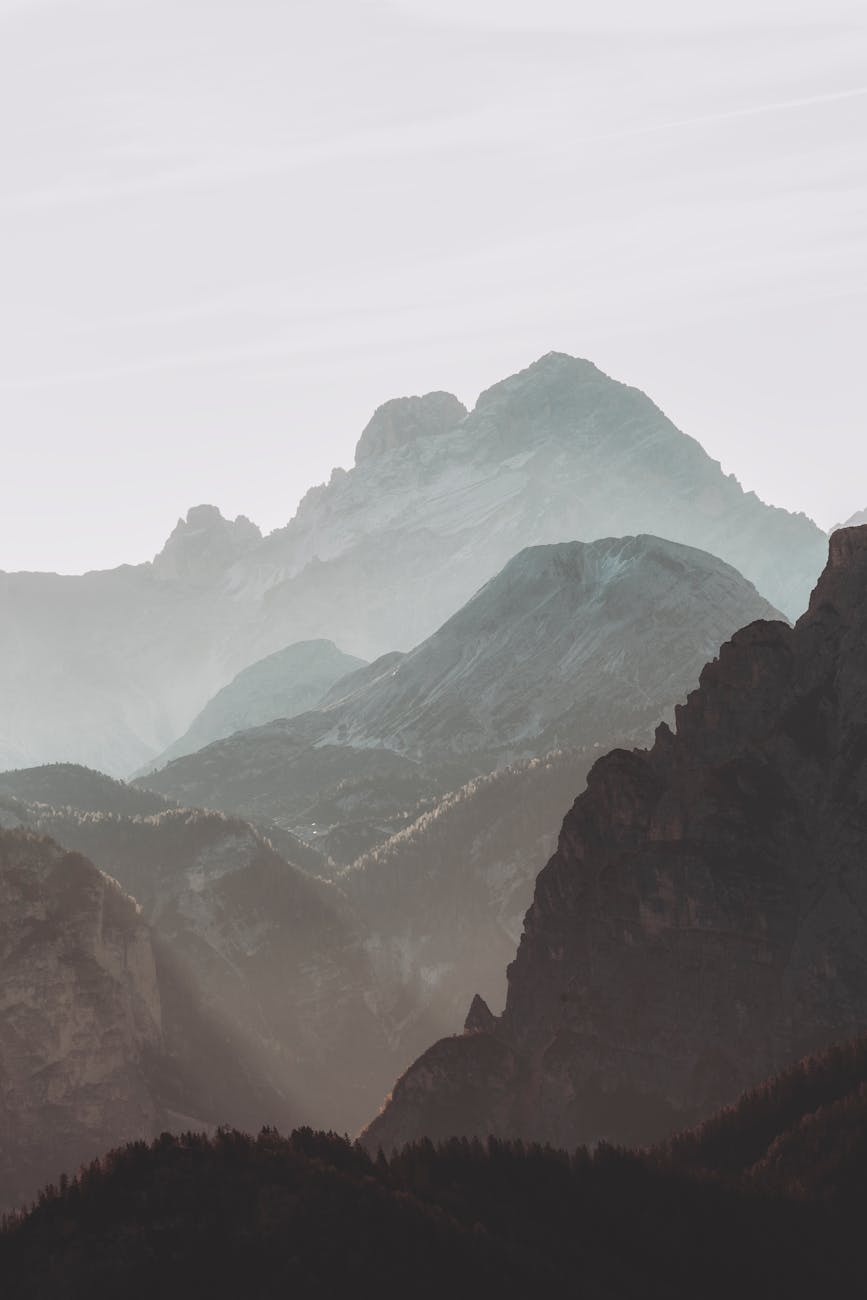
The analogy used to explain dastgahs to us was that of a mountain range. Basically there are three aspects to a dastgah, the intro (base), body, and conclusion. But you can jump up and down different mountain peaks depending on what guse/maqam you’re using. Thus I think this is what the speaker meant when they said that there are “rules for improv”, you’re either going up and down one mountain or jumping up to another or going back down to the base to end the song.
A better picture of a drawing I made to convey this is shown below. The sense I got was that one jumps between different sets of scales that go together basically, up and down the mountain range.
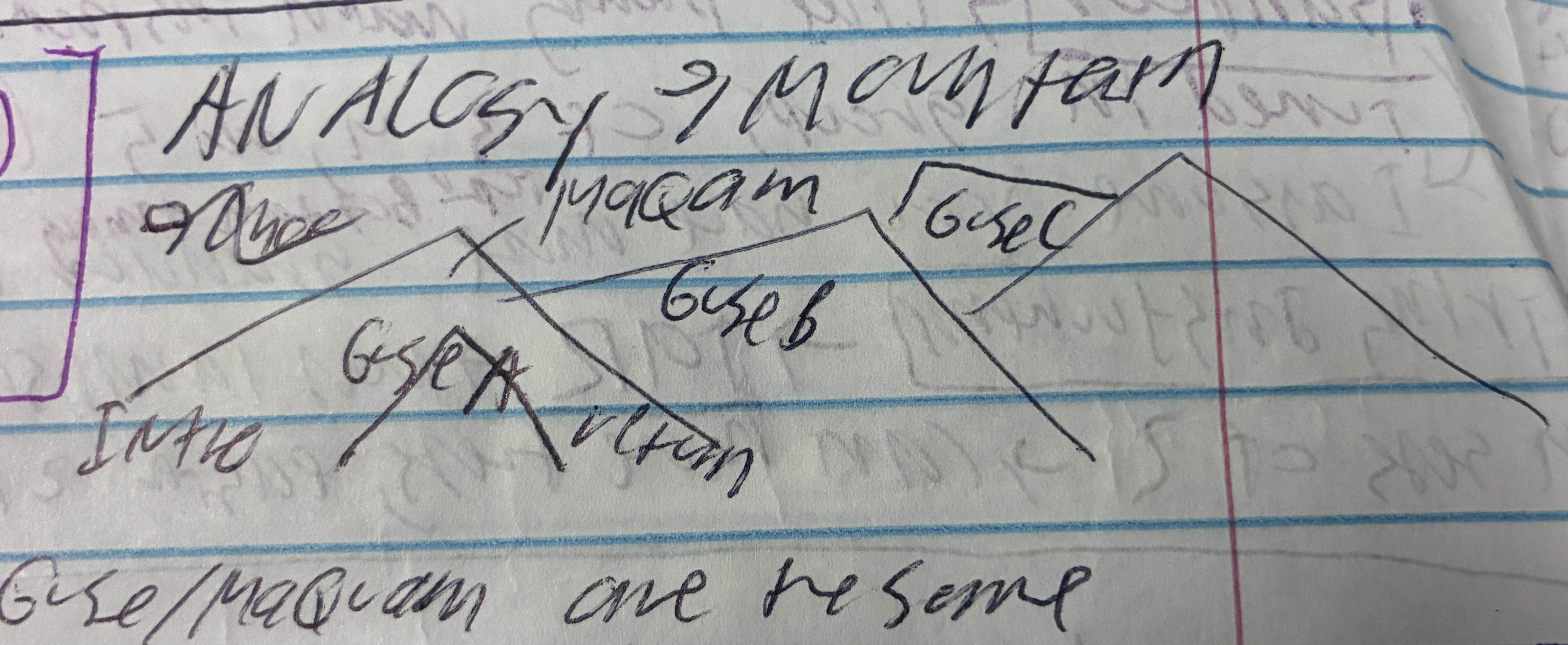
Thus for a mountain “station” one moves around tetrachords, but descends back to the “base” of the mountain or lower scale at the end.
Traditional Instruments
After the main music workshop we learned snippets of the history of traditional Iranian instruments/their development. Unfortunately here my notes become really fragmented because I ran out of paper and starter writing them in the margins of my economics notebook, so you will have to trust me on this.
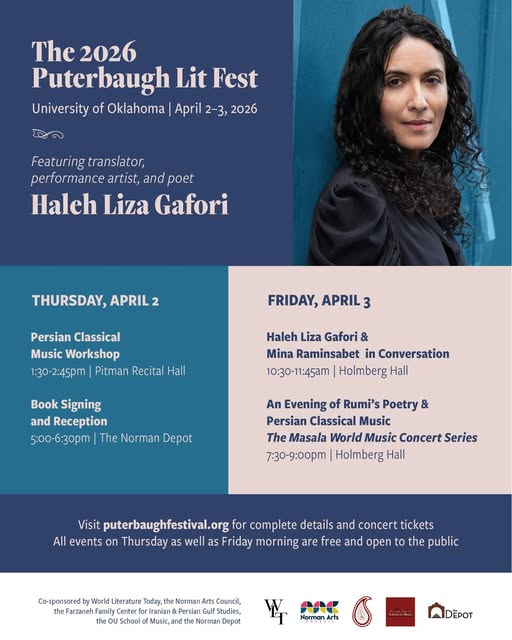
This was the flyer for the event that I found online, the other people that spoke at the workshop were Hamed Erfani (composer-in-residence for the Oklahoma Chamber Symphony) and Hossein Khaleghian (oud/sitar)
Main Speaker
The main speaker of the event featured on the flyer also came up after the music explanation part of the workshop and gave a brief talk on the poet Rumi. From my notes I have that Rumi was an Islamic theologian until a vagabond asked him to come see the world with him, and thus Rumi learned about “deep listening” and the “whirling dance”. The speaker said that tradition says that the “music overtook him” and that’s how Rumi became a poet. Apologies to the speaker if I’m not doing that story justice, my notes are, as noted previously, very fragmentary.
Conclusion
That was a summary of my experience attending the Persian Classical Music Workshop at the Puterbaugh Lit Fest this April. It was honestly a really cool experience despite some of the music jargon maybe going over my head a bit. I learned about it through an extra credit opportunity in my World Literature to 1700 class, and thought it wouldn’t hurt to go check out. Thanks to the organizers of the Puterbaugh Lit Fest, my world literature professor, and all the speakers at this event for this experience. I hope that I’ve passed on just a bit of what I managed to learn about Persian music/poetry from this blog post, and if any errors exist they are mine and mine alone. As previously stated, I am a musical layman, who took rather fragmentary notes on this whole experience.

