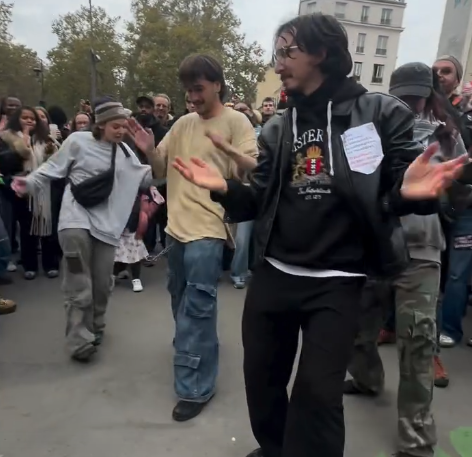
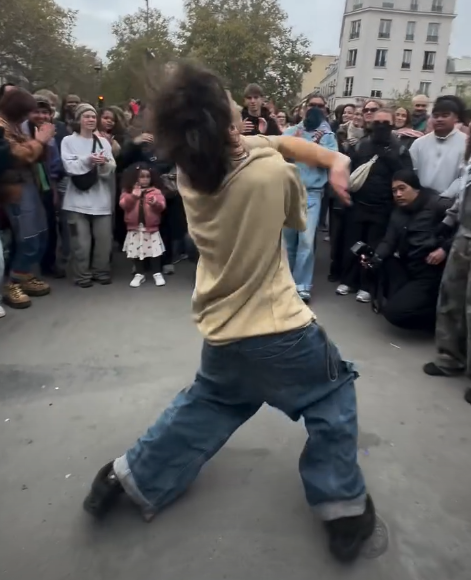
Recently, I came across a video on Instagram that I haven’t been able to quit watching. It’s a video filmed on a cell phone camera, posted by a French activist. And amongst the many violent and overwhelming cell phone videos from French activists, this one flipped my perceptions of what the media calls these “riots” completely upside-down. Instead of raiding shops and setting fire to cars, the protestors in this video are performing a synchronized dance in the middle of a circle of enthusiastic onlookers to a mashup of Latto’s upbeat hip-hop track “Big Energy.” The video made me stop and smile. It was refreshing, hidden among the heaping divisive narratives and negativity that constantly spread on social media. But at the same time, it felt so inherently “social media,” so definingly “Gen Z.” We’re the generation of TikTok dances and ridiculous trends, memes and global inside jokes.
But we’re also a generation of change, a generation of collective action demanding a better future for all. And that is linked so closely to the technological globalization that makes moments like these possible. That’s why, from way over in Oklahoma, I’ve had the ability to bear witness to what has been happening in France since late September. There, students began demanding better conditions at their schools, which have been severely underfunded and taught by a shrinking workforce. Those fighting a rapidly growing cost of living joined in, and over half a million people have turned out and taken to the streets across the country in a trend that is now moving through the sliding feet of a mobilizing youth across larger Europe. However, many criticize this movement as the protests have turned violent and destructive in some cases. But much of that criticism comes from a place of privilege, one that does not recognize the motive behind this uprising as not purely a generational one, but one of class as well. The catalyst for the sister protests that arose from similar frustrations in Spain, which demonstrates its roots in empathy, occurred when an 87-year-old woman was forced out of her home by a 230% rent hike. With nowhere to go and unable to survive the conditions of the streets of Madrid in her old age, Maricarmen Abascal died two weeks later. She had lived in the home since 1956. Then an investment fund came in when she was at her most vulnerable, likely trying to make the most of her last years, and drove her right to death. She became a symbol for the movement.
Why did the government allow this to happen? Obviously, the root of the issue is systemic and has to do with an over-valuation of economic growth and profit compared to the wellbeing of the working class. But, unlike the spurs of other social movements this decade, the government had a system of checks–the courts–that could have prevented this wrongdoing before it even happened. But it happened nonetheless, and this demonstrates a vital development that the technologization of the world has contributed to global democracy. Governments must now avoid such wildly unpopular and clearly unsympathetic actions because stories and symbology now ripple quickly through the pond of the most connected generation in human history. We saw it with the Black Lives Matter movement after the murder of George Floyd in 2020. A very similar sequence to what is now happening in France occurred then. A person killed by an unjust system became a symbol for a revolution that started in one city, spread rapidly and intimately via social media, and then overwhelmed the entirety of a nation and even the world to cause a broad societal change. Social media knits a new fabric of a network that gives an allotment for connections across a class and a generation that increasingly sees themselves as a single, united group. The young people of the world, who demand change.
But that symbol, of Abascal forced out of her home, is such a contrast to the upbeat, modern style of the Danse 2 Rue collective that gathered on the same streets she was kicked to. Is this group making light of the situation, of the motivation behind this gathering? One could take it that way, but I do not believe that to be the intent. Not remotely. Dances like these are uniquely “Gen Z” and therefore may be misunderstood by those unfamiliar. But the virality of this video demonstrates some powerful things–hope, and the pursuit of a future in which we have the foundation to create a society in which people can freely express themselves with the support of their community. A future where everyone can afford a home, get a good education, and we can dance together in the streets. It is representative of what our generation stands for–dancing is an expression of hope for a better future and the ability to unite for a common cause but at the same time refrain from taking ourselves too seriously.
This isn’t the first time dance has played a role in such a movement. Dancing has been elemental to many past social movements in different forms and has even led to real policy change in some cases–notably, it was a key method of artistic protest during the AIDS crisis. It has existed forever, reflecting changes, development, and struggles in society. And dance has shaped these struggles and been perceived in a variety of ways by a range of actors. Just take the Ghost Dance movement among Indigenous Americans in the late 19th century, and the horrors that it led to when it clashed with the violent forces and fears of the settlers. Dancing has typically been on the side of the oppressed, like in that case. It has provided “solace and liberation” to many peoples throughout history, from those shackled by chattel slavery to perhaps those today in Europe, fighting for their rights to education and housing.
Maybe dance isn’t quite “central to a revolution.” Perhaps it’s a little silly or even distracting from the point as it spreads its way across the internet among much more informative or emotionally-moving videos and journalism. But it grabs people’s attention. It is the language of a new generation. And dance remains a strong reflection of societal values and movements. From across the Atlantic Ocean, I saw that video and found hope. It forced me into deeper thought about what I deserve to be getting out of my country and my education. But most importantly, it made me feel globally connected to an international group of young people clawing against a broken system and dancing toward a better tomorrow.

