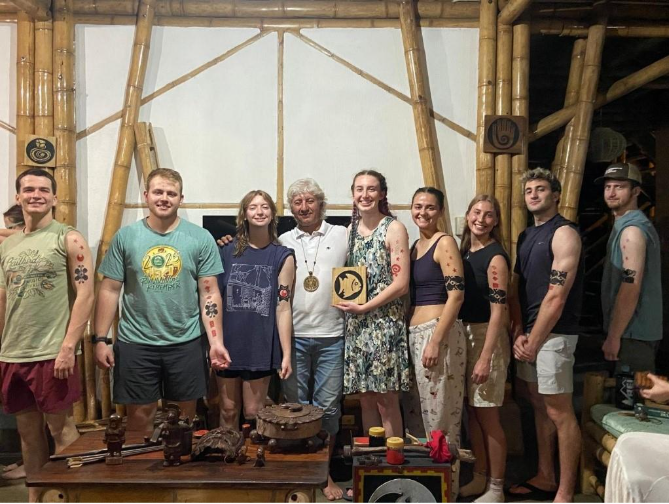
Sooners Without Borders is a Registered Student Organization active under the Gallogly College of Engineering at OU. I am the Vice President, and my friend Victoria Gilfillan restarted the club’s international service trip tradition this year, as we coordinated a trip to take 11 OU students to Chone, Ecuador.
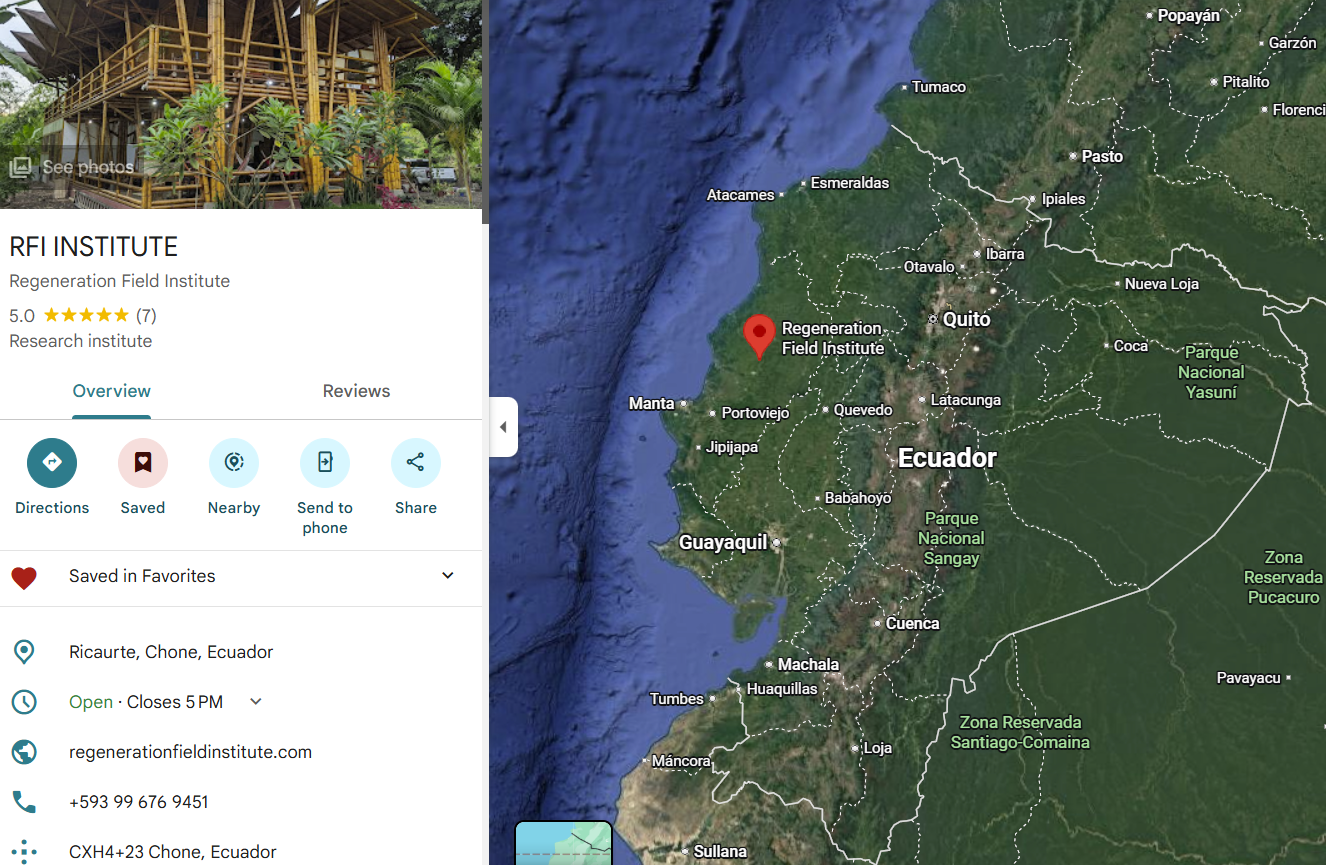
Travel began January 7th, 2026, and all students arrived in the morning of January 8th at the Quito airport. For this program, the 11 OU students were joined by 12 UC Berkeley students, totaling 24 for our program. From the airport, it was an 8-hour bus ride to the RFI farm. The journey from the mountains of Quito down towards the coast consisted of fog, hairpin turns, and the discovery that bathrooms are BYOTP.
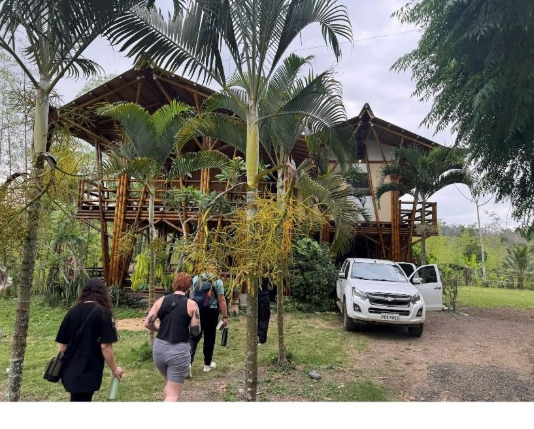
Students arriving at the RFI farm in Chone, Ecuador, on January 8th, 2026.
Upon reaching the farm, we chose bunks, were served dinner, and spent our first evening getting to know the UC Berkeley students and each other better. Our general schedule was a 7:00 am wake-up call, breakfast, morning work, lunch, afternoon lesson/lecture, dinner, showers, evening work/lesson, and quiet hours at 10:00 pm. Although this schedule was followed very loosely, we were up in the morning at 7 at the latest, and in bed by 10:30 at the earliest. Our 9-day trip was extremely full of activity, learning, and making new connections!
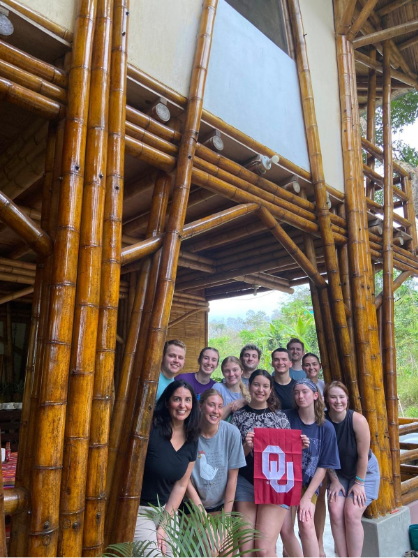
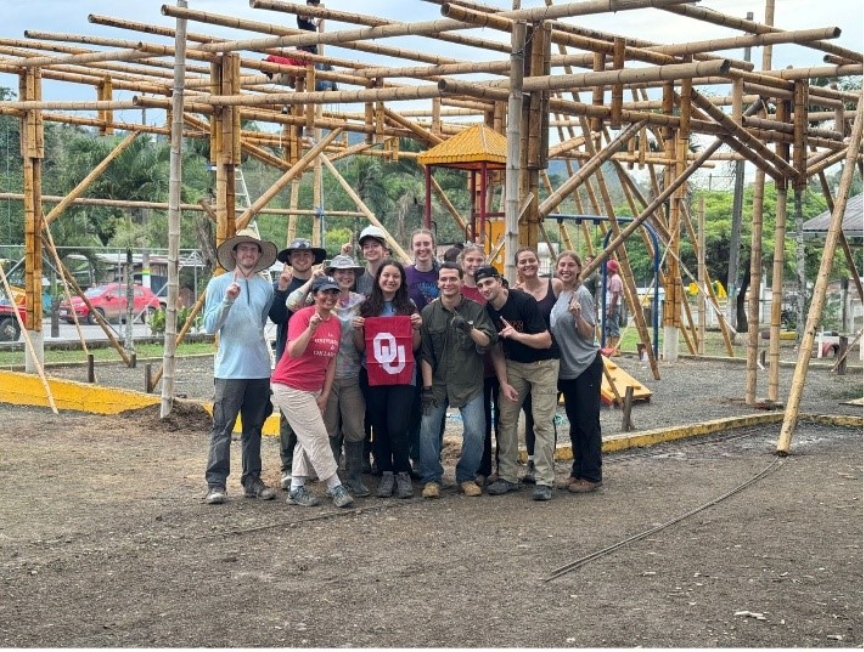
First group photo at the farm! From left back row: Trent Rogers, Audrey Hirchert-Walton, Victoria Gilfillan, Jaden Sloan, Chaz Hall, Travis Lloyd, Jimma Fuson. From Right front Row: RaCamie Bover, Julia Robbins, Izzy Harris, Ashlyn Olmsted, Lisa Morales.
On our first day, we got a tour of the farm and learned more about RFI’s mission. We then had the first of several bamboo lectures from Jorge Loor Ocampo. Jorge is an architect who works with RFI on bamboo projects and instructs programs like ours. During these lectures, we learned about the advantages and limitations of bamboo as a building material, how it is prepared and used in the best practices, especially in projects like ours, which gave us a better understanding of the structure we would be working on. We also had hands-on learning experiences in workshops on the farm, from carrying bamboo to shaping the characteristic “fish mouths” needed for joining bamboo in structures.
We also had the opportunity to learn about RFI’s syntropic agroforestry systems implemented on their own farm and other local farms. Upon touring the farm on the second day, we saw the rows of diverse plantings that are working to provide shade and biomass to restore rich jungle soil quality. At this point, our leaders separated us into three groups to work on various projects around the farm. The projects we worked on at the farm were “Bamboo Dams” and “Living Edges”.
The bamboo dams served to retain valuable topsoil and reduce sediment pollution during seasonal heavy rains. Bamboo was cut nearby on the farm, transported by us to the gully we were damming, hand-cut and hammered into place by rotations of groups. As the dams are biodegradable, the hope is that over time, the soil will build up behind each placed dam and reduce the dramatic slope in the area, providing more usable land.
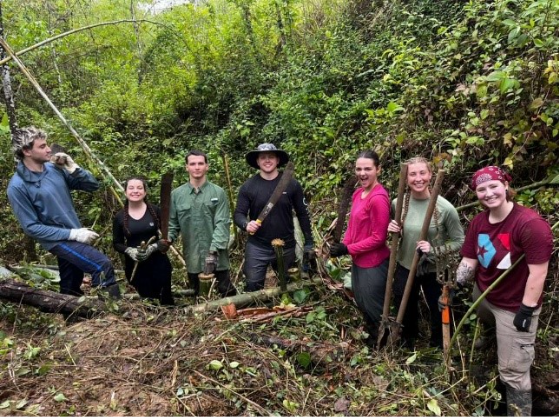
Students working on the bamboo dams.
Living Edges is the project lining the pathways on the farm, encouraging so-called “bio-corridors” that can be a hub of biodiversity connecting different areas of the farm. We first had to work to loosen the soil, which we did using the strategy of “double digging”, the same method commonly used in the Peace Corps agriculture sector. Our club advisor, Mrs. Lisa, and RFI’s trip leader, Chris Galena, had both served in the Peace Corps in Paraguay and were well-practiced in the work. These plantings lining the pathways will help to spread native plant species throughout the farm and provide habitat for animal species, such as howler monkeys, to move with ease around the area.
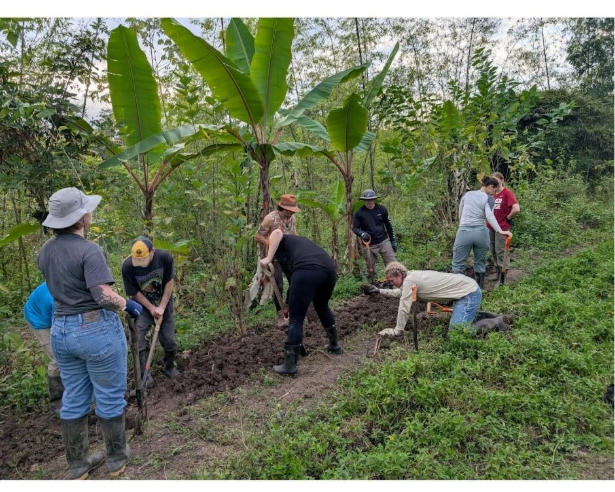
Students double-digging for bio corridors.
One of the most rewarding activities we participated in was the “mingas”, which brings together many community members to work on one farm for a concentrated period of work. The idea is “today for you, tomorrow for me”, and was a great opportunity to connect with the local farmers. We traveled in an open bus as close as possible to the job sites, but had to go on foot when the roads were not able to accommodate our large vehicle.
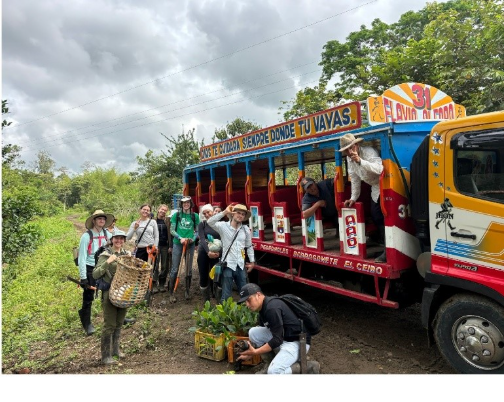
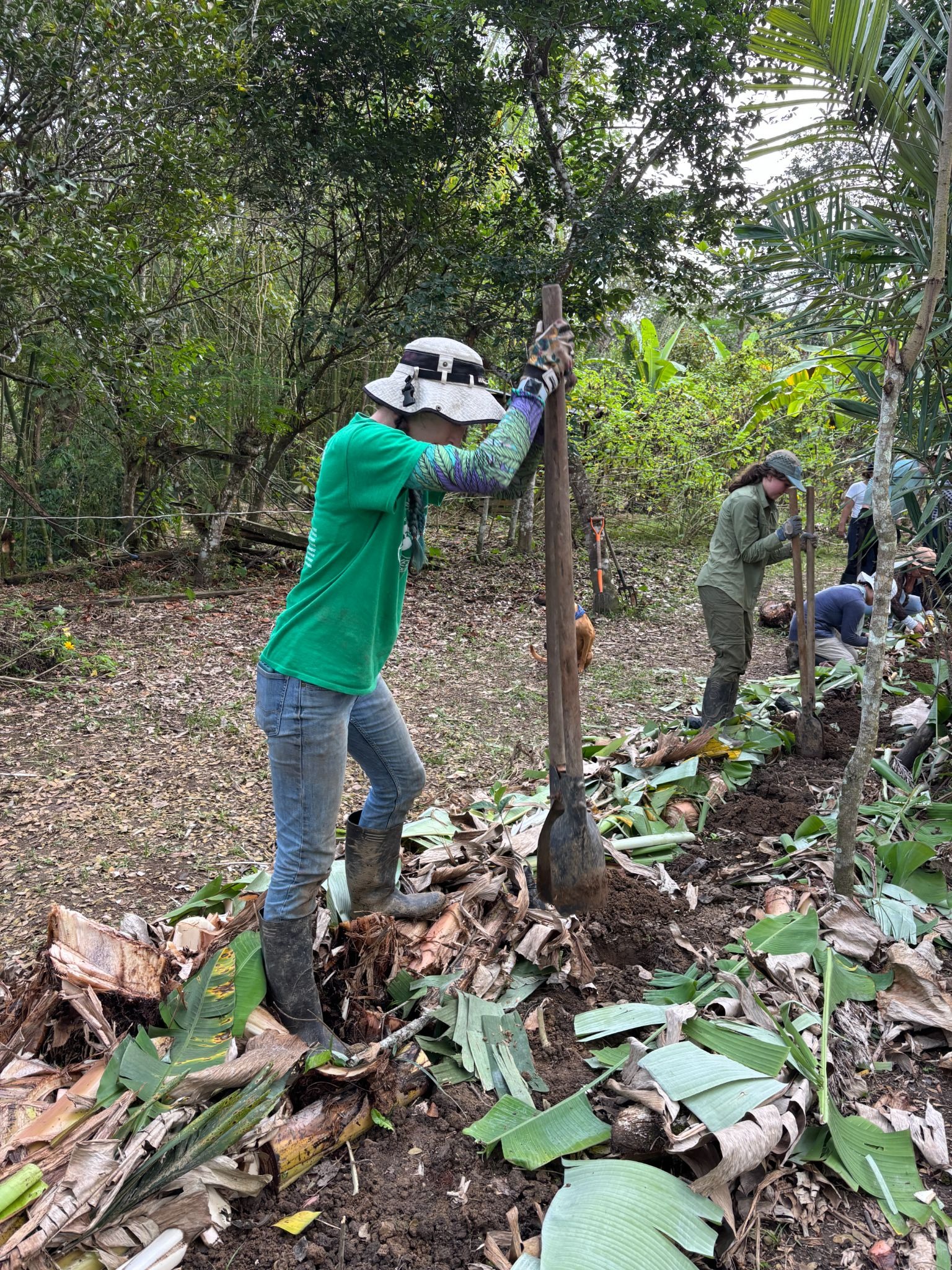
We transported heavy loads of plants, stakes, seeds, and tools to the sites and helped plant highly diverse rows of plants that would be the base for syntropic agroforestry systems on these farms. When we traveled to the mingas, we had “tongas” brought to us for lunch. Tongas are mixtures of rice, plantains, peanut butter, and chicken wrapped in a banana leaf for transport. This natural packaging allowed us to dispose of our leftovers right where we were sitting. It’s freeing knowing everything you consume can go right back to the land you stand on.
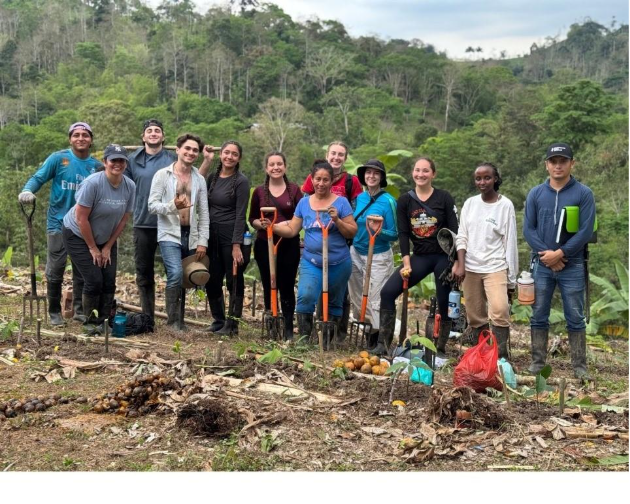
One group at a minga site, after loosening soil and planting the first section of the syntropic system.
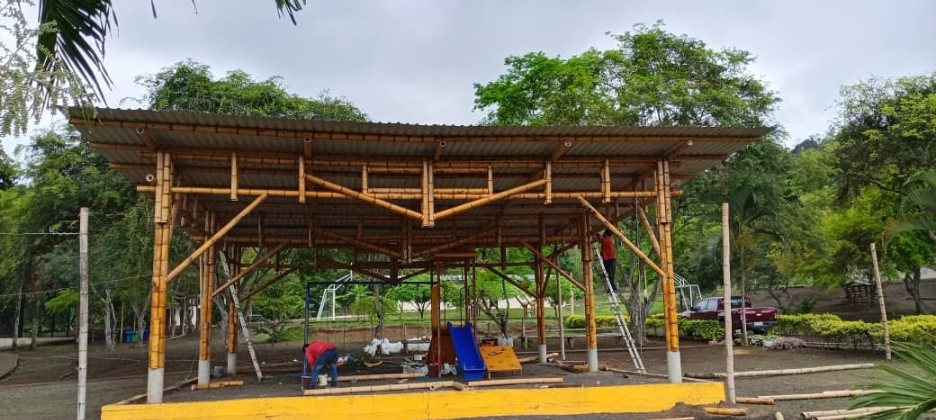
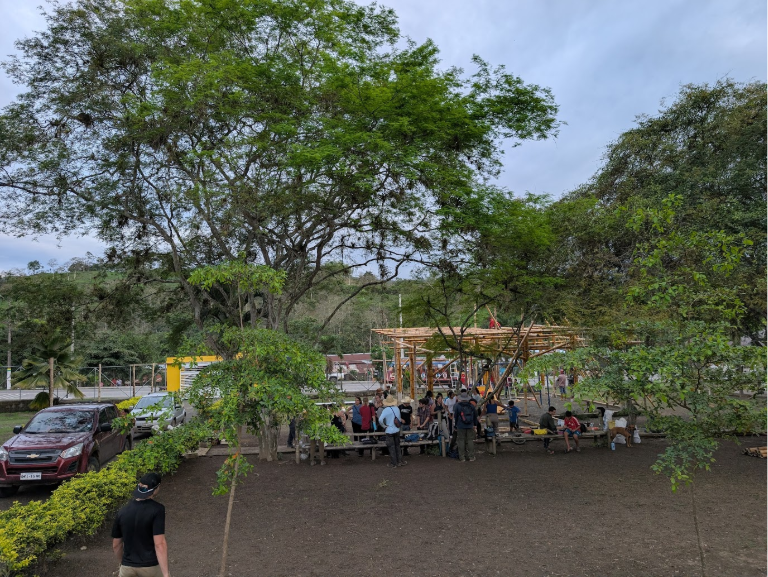
The main project we worked on throughout our trip was a playground shade for a school in the nearby town of Pavon. The playground had previously been shaded by just a tarp. This shade would allow the children to play on the structure regardless of the weather.
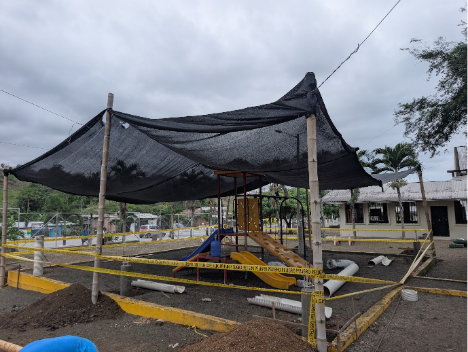
After our bamboo lessons with Jorge, we helped prepare the bamboo for use in construction, cleaning and sanding it before pieces were cut and assembled. There were three trusses in this structure, and some students were able to help with their assembly.
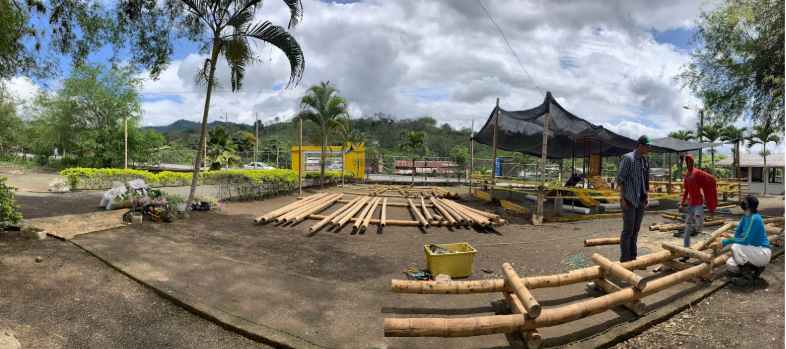
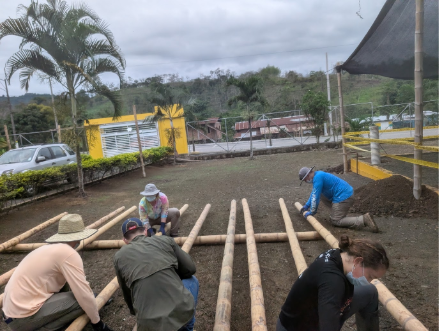
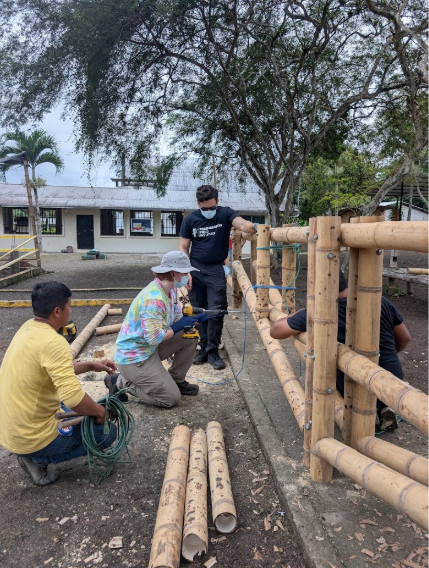
Once bolted together, teams of students helped to lift them into place, while the maestros and Jorge supervised their placement. The maestros have been working with bamboo for many years. They can fashion fish mouth joints in less than a minute, while we spent an hour making our less-than-ideal joints.
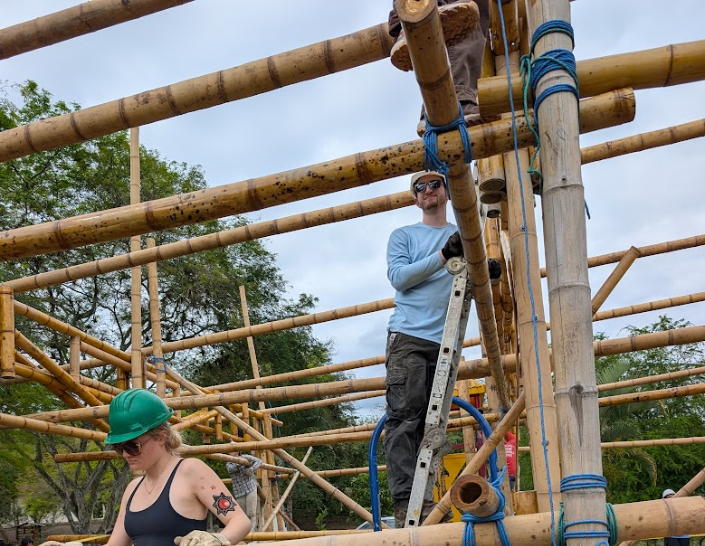
As more of the truss supports were properly connected, the scaffolding could be taken down incrementally. We applied varnish after the trusses were in place, which will help ensure the longevity of the structure.
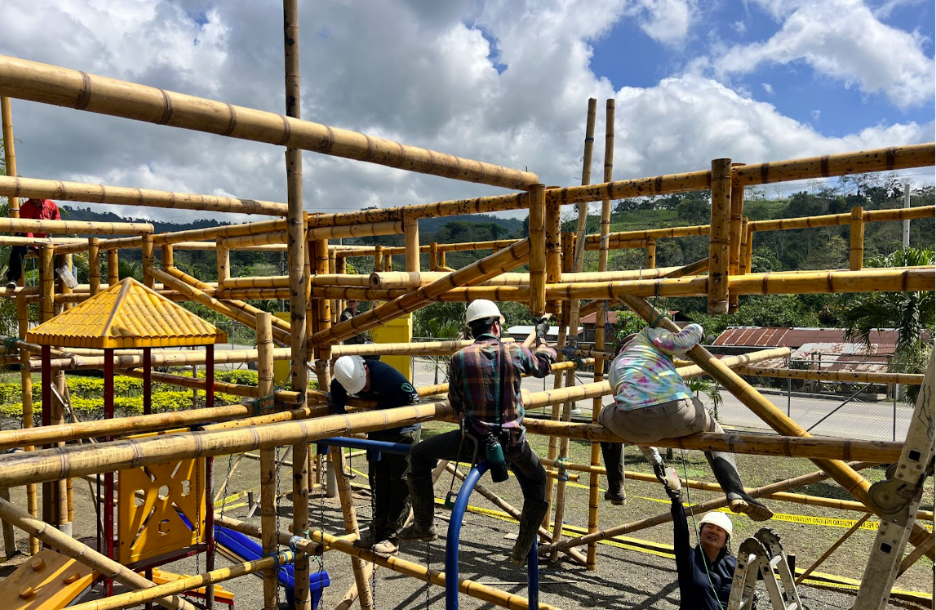
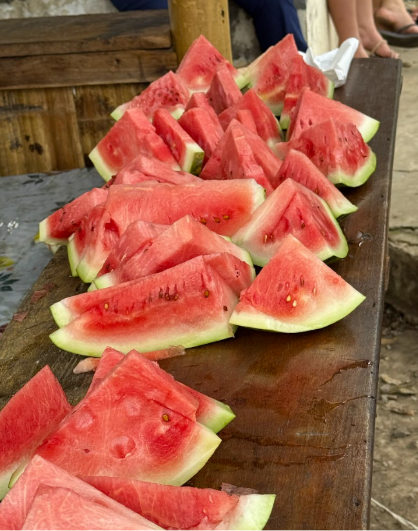
On the last construction day, we celebrated with some of the local students and families of the school, pruned their syntropic system towards the back of the property, and enjoyed watermelon!
When we weren’t working on these projects, we also had a few excursions planned by RFI that brought us closer to Ecuadorian culture. We visited a primary forest with a professor at a local university, got to tour a 120-year-old house made from bamboo, saw the inner workings of a cacao farm and chocolate production, and swam at a waterfall.
On the second-to-last night, we were visited by an artist named Ricardo, whose life’s work is to recreate artifacts found in the area that once belonged to ancient Ecuadorian cultures. He told us that using animal forms was highly important to the ancient people, to embody the characteristics of a particular animal to help with hunting or battle. He said that he himself is a bat, because he spends his time feeling around in the dark to understand the world. His artwork is inspired by ancient motifs, and he collects fragments of artifacts and works to reassemble replicas that inform current understanding of these ancient peoples. He guided us through an anthropological study of several artifact fragments, had us think deeply about what their purpose could be, and then provided an interactive experience where we could all get temporary tattoos that symbolized the elements. He and his son then offered art for purchase, and we bought this board from Guayacan wood, painted and carved with a symbol for water, as a gift to the WaTER center.