Near the end of last year, the Oklahoma State Regents decided to terminate a set of low-performing programs at the University of Oklahoma (OU Daily). Among these programs were B.A.s in French, Chinese, Arabic, and German; a B.A. and a B.S. in Geography; and an M.A. and an M.S. in Interdisciplinary Studies.
There were also other programs on the State Regents list, but I highlight these because I find the trend concerning. I’m not sure which is worse – that the Regents are defunding a set of programs that focus on cultural education or that there weren’t enough students in those programs to keep them alive in the first place.
I feel the loss especially, as I centered my time at OU around cultural education and experiences. I will be graduating in one week with Majors in Creative Media Production and a Planned Program in Multicultural Studies, with a minor in French. I have a great love for people and the stories that make them who they are. College has given me the opportunity to learn about and to connect with people I never would have otherwise. I’ve changed so much in how I talk about people who are different than me and in how I approach cultural conversations.
I think a cultural and an international education are so important. Even if a student doesn’t want to focus on social studies or humanities as a degree, these educational departments offer events that they can still be a part of. They offer opportunities for students of different cultural and educational backgrounds to interact. Thankfully, only a handful of OU’s cultural programs have been terminated, but it is a trend that worries me. The devaluing of the humanities leads to a narrower understanding of our world, something I don’t wish for OU.
Did you know that there are four main languages in Scotland?
According to the Scottish Government, there are over 150 languages spoken in the country. But four are the most common. English is the primary language spoken, but three others are promoted on a governmental level: Scottish Gaelic, Scots, and British Sign Language.
Many have heard about Gaelic, and the presence of Sign Language is no great surprise, but Scots is lesser-known. Hearing it spoken, it can be misinterpreted as a dialect or manner of speaking by Scottish people that is hard to understand. In reality, it is a different language altogether. Scots shares some common words and sounds with modern English, but it branched off from Middle English on the Germanic language tree.
Because of its close relation to English, some English speakers can understand large amounts of Scots when it is spoken, but reproducing it is another story. While it may sound familiar and make sense to us grammatically, Scots has a whole unique vocabulary that English speakers would be unable to define if asked.
I learned a lot about Scots during my time in Scotland (even bringing home a Scots edition of Harry Potter and the Sorcerer’s Stone), but I was introduced to the language through poet and Scots advocate Len Pennie. She’s found on Instagram at @misspunnypennie, where she posts Scots words of the day to raise awareness for the language and its place in Scottish culture. Her account is a great place to get an introduction to the language from a native speaker.
One thing I miss about my trip to Glasgow is the free third spaces I found there. Many of the museums in the city, as well as the botanical gardens, had free entry. The same was true in Edinburgh. There was a huge national museum with free entry that would take multiple visits to see everything. The castles and monuments often had paid entry, but there were many cultural and artistic locations that were open to all.
Like public transportation, these also exist to some extent in the United States. The National Zoo and the complete network of Smithsonian museums are free in Washington D.C. But outside of the capitol, I have very rarely seen free cultural spaces. This results in a lack of accessible third spaces. If I want to get together with friends, we must pay for our event 90% of the time. This can mean anything from buying coffee to paying for an escape room. But in Scotland, I spent hours in the Kelvingrove Museum without having to spend any money at all.
Since the United States is so big, I wish that there would be more publicly-funded projects across the states. Even if they could only exist in the state capitols, I wish there were more free third spaces in the U.S.
I saw in Scotland a different attitude towards public funding for the arts and culture than I do in the U.S. While the U.S. is defunding its programs, Scotland is strengthening theirs. This attitude towards education, culture, and productive uses of free time is one of the many things I miss about my time abroad.
Ever since I came back from Scotland, I have wanted to go back. It is my dream to plan another trip there one day, this time not tied to academics. There are a few elements of daily life that I miss compared to my experience in the U.S., and this post looks at the first of them.
One big difference I noticed in Scotland as compared to the U.S. is the presence of public transportation. In the U.S., there is good public transportation in big cities, and Amtrak connects many of the major cities across states. In Glasgow, I could get anywhere I wanted in the city through a smooth bus system. I didn’t qualify for this as I was not in the country long enough to be considered a resident, but Scottish residents under 22 years old get free bus fare across the country.
With just a mild inconvenience in getting groceries, I was able to get everywhere I needed to go without a car. Thanks to a strong train and inter-city bus network, I was also easily able to travel between Scottish cities. We had to rent a car to get to the islands, but the mainland was easily traversable without one. Scotland is a smaller country, so this type of network is more achievable, but I don’t see anything nearing its scope in the U.S.
One thing relying on public transportation did was it required me to slow down and take in my surroundings. When I visited new cities, I was required to walk. I could see anything I could get to on foot in a day. I learned to enjoy the small things like country lanes and small houses. While I could see these things from the windows of a vehicle, walking made me appreciate them all the more.
This was mostly an overview of the strategic reasons Greenland has historically been important to U.S security, and an explanation of the long history of U.S arctic acquisition behind the current administration’s threats to acquire Greenland by force, which made the news a few cycles ago. An abridged summary of the presentation, given by Rob Andrew and Sofia Givens of the College of International Studies is as follows. This is an extremely abridged version and I cut a lot of the important history bits for brevity, so apologies if I accidentally misrepresent the lecture in any way. Some of this is also my rephrasing of points made in the lecture from my notes.
Background
There is a UN council that manages security relations in the arctic, namely, the “Arctic 5”, which includes the U.S, Canada, Russia, Norway, and Denmark. All of these countries have coastlines in the arctic ocean, hence their inclusion on this council. There are also the “Arctic 8” of countries who don’t have direct coastlines in the arctic, but have some sort of other connection/interest tying them to the area.
The arctic has traditionally been low-conflict, due to its status as an inhospitable wasteland that no country really wanted to deal with. However, with climate change and the melting of the ice, the arctic suddenly seems to look very strategically important, especially in regard to resources. There are also other reasons control of the arctic is something countries want to have, it was traditionally submarine territory, there were concerns about anchor dragging and the cutting of undersea cables in the area, and it appears that I have “Russia Training—–> Test nukes” written down in my notes, which is a horribly ominous bit of notation. I don’t know if that means Russia wants to test nuclear weapons in the arctic or historically did, but suffice it to say many entities have an interest in this area.
Shipping
There is also the potential for a better shipping route to open up in the arctic once the ice melts, that would reduce the transportation time from thirty days to twenty days, which is important for the economic concept of “just in time” shipping, because as it is the North Sea Route is only open for a few months a year
Proximity to Strategic Locations
Greenland is close to Russia, Alaska, Europe, and Russia has been remilitarizing bases near Greenland as well, and the primary purpose of like the one base the U.S maintains there currently is to detect Russian ICBMs. Thus there is a good reason to want to maintain bases in Greenland/security in that part of the arctic.
Downsides to Acquiring Greenland Specifically by Force
It would be the end of NATO, Russia would achieve a long-held goal of theirs to get the U.S out of NATO for good
A military operation to take over Greenland would cost so much money
There’s the risk of a Greenland insurgency
Indigenous groups in Greenland get a lot of benefits now and wouldn’t want to give those up
Sets a precedent for the violation of a country’s sovereignty
Sets a precedent specifically for Russia to acquire land by force in the Arctic
The U.S has bigger fish to fry internationally right now
No one in the U.S would be moving to Greenland
Policy Recommendations
The U.S would have a lot more bargaining power if they were a signatory to UNCLOS (The United Nations Convention on the Law of the Sea), they could vote on if Russia gets arctic mining permits, and it would give them a lot more international legitimacy overall, because the U.S follows UNCLOS in everything but name in the status quo anyway. If the U.S really wants more bases in Greenland specifically there are mechanisms for them to negotiate that through diplomacy, which would be the recommendation of the presenter if anyone were to consult them on the matter.
This was a really interesting presentation and there was a lot of nuance and history that I had to cut from it to get down the main points of the talk, but I ended up learning a lot overall from this about U.S history and its historic geopolitical maneuverings.
This semester I have continued to participate in my favorite on-campus group: OU Cousins. This organization has brought so many incredible friends and experiences over the past two semesters. However, this semester, one specific event stood out to me.
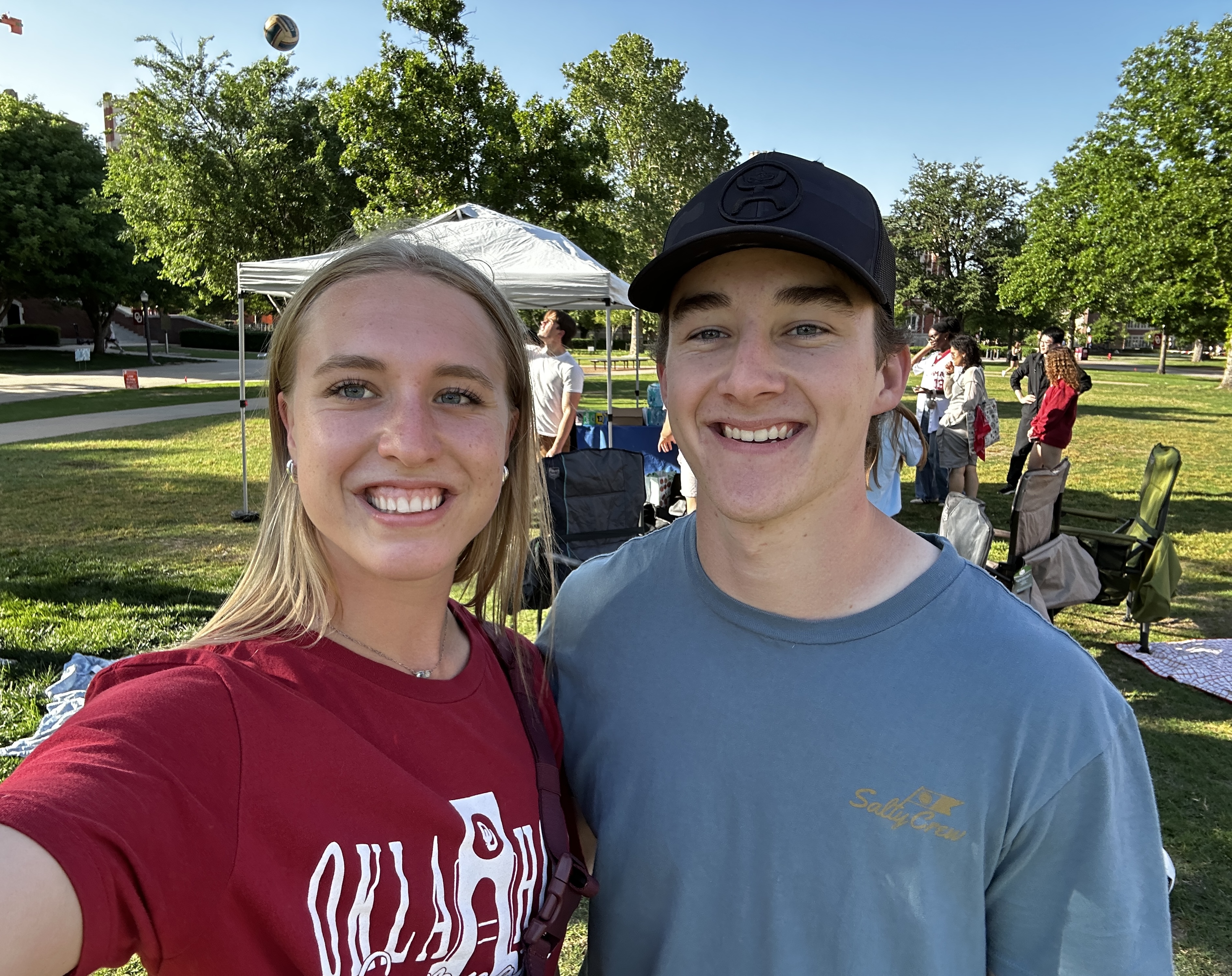
The end-of-year picnic for the OU Cousins was such an amazing way to grow closer with so many international and local students that I had not previously known. When I got there, I sat down to eat and met some friends from the local Oklahoma area. I really enjoyed talking with them about their love for travel and global issues. Following, some other members and I started a game of volleyball with around eight other people at the picnic. Although I had not previously known these members, I felt so connected with them as we bonded through laughter over how bad we all were at the game. I fully believe that the ball went more out of the circle than it did in. Although there were minor language barriers with some jokes, everyone could get a good laugh out of missing the ball or almost landing in the splits to try to hit it.
One of the girls that I met there was also named Ava, and she was an OU Cousins organization board member. I really enjoyed getting to know her as we played volleyball and really connected with some of the club staff. Talking with her has inspired me to one day be a part of the board of OU Cousins so that I can get even more connected with the organization.
Overall, I really enjoyed the end of year picnic and getting to know some other club members. I can’t wait to continue my involvement in the club!
Around the world, millions of families live without sustainable, safe, and affordable housing. In countries like Nicaragua, many families on the outskirts of the cities face a crisis as they are unable to afford housing. This inability to have a home can be due to poverty, natural disasters, and limited access to necessary resources. Having a house is more than just a roof above your head. For many, it means a stable home and an opportunity to build a better future. Studies show that children are more likely to succeed in school when they have a reliable home and their families are more financially stable. Unfortunately for many families in Nicaragua, poverty has led them to reside in shelters made of a few concrete blocks and metal siding. These shelters are unable to survive harsh weather conditions, and electricity and plumbing are unavailable.
This is where sustainable housing is important. Sustainable housing creates homes that are affordable, durable and cheap to build. Having communities implement projects to build these homes could help thousands to millions of families receive stable housing. Instead of using expensive materials and harming the environment, many sustainable housing projects utilize local resources and energy-efficient designs. However, rather than bring these solutions in from outside the country, the goal is to work with local communities to employ locals and provide housing at the same time. This ensures a stable job and home for many families.
When I visited Nicaragua on a mission trip two years ago, many of the children with whom I worked were living in shelters without electricity, plumbing, or even walls. This experience really opened my eyes to the need for affordable and sustainable housing within the Managua, Nicaragua, community. Every family deserves a safe place to live, no matter where they are living in the world, and through sustainable solutions, there is hope for future generations.
This summer, I have the incredible opportunity to return to Spain to hike the southern side of the Camino de Santiago. Previously, I hiked the northern part of the Camino along the coast while I was in high school with a student group. This summer, I will be hiking with alumni and friends from my high school. During this 10-day trip, I will be hiking over 100 miles along trails that have been in use for hundreds of years. Each year, thousands of pilgrims take these walks across Spain as faith walks in reverence of St. James (Santiago) or as a walk of their own faith.
One of the main aspects of this pilgrimage is walking in silence while connecting with the Lord. Each day, I will be hiking in at least two hours of silence where I can pray or silently connect with God. During my last camino, I was able to experience the incredible ways that God can move in silence as I admired his creation through nature.
Spain is filled with beautiful rolling hills and coats that are amazing to walk through. While doing the camino, pilgrims walk through many cities and countryside where you are able to see what daily life is like within and outside of main cities. This summer, I will have great opportunities to take tours while in the cities we pass through to learn more about the history of the Camino and Spain.
The final stop of the Camino is the Cathedral of Santiago de Compostela in Galicia, Spain. Here I, alongside other pilgrims, celebrate by sharing travel stories and receiving the stamp of completion. It is common for the church to be filled with many people carrying packs that they have walked with and resting their legs. I am especially excited to end here because previously I did not finish the camino at this location. Overall, by the end of this trip I will have walked over 250 miles of the camino!
Over winter break, my family always has a tradition of attending the Christkindl market held in downtown Denver. The Christkindl market is one of the most magical Christmas traditions related to my German heritage. At the market, vendors in small wooden shelters covered in lights and pine sell authentic German toys, food, and ornaments. As you weave through the market, there is always a smell of sauerkraut and latkes, along with sweet pastries. I have loved attending this market with my family and friends, and this past Christmas, I was able to go with my best friend and her family. This was the first year that they held the market in a new place, so everything was more spread out. I loved the new layout and I felt like I was able to enjoy the market so much more because there were fewer crowds.
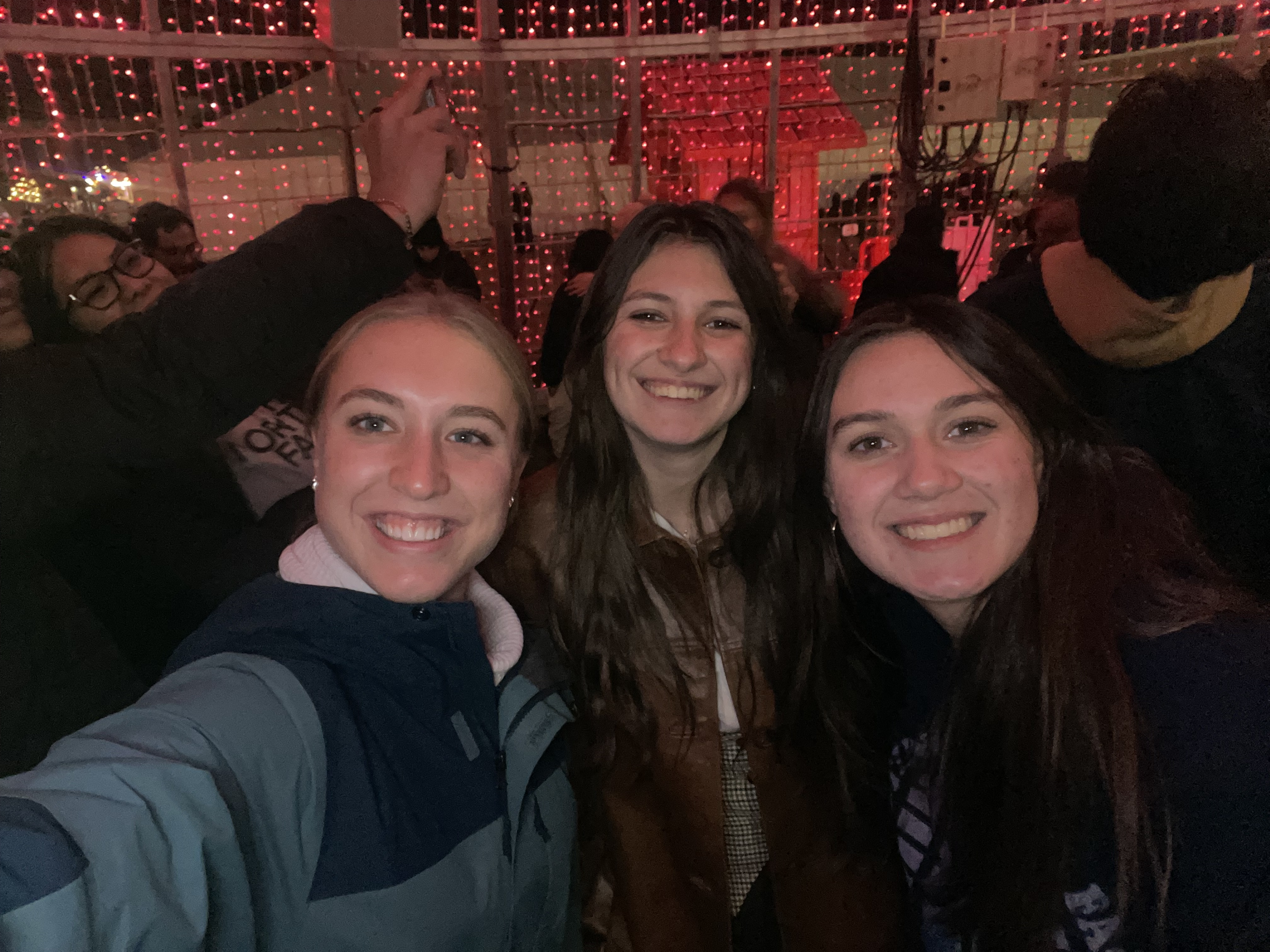
One of the best parts of the Christkindl market is the huge lighted tree located in the center of the market. The best aspect is that you are able to walk underneath the tree and watch the programmed lights above you. I really enjoyed looking at the lights with my best friend Ari while listening to Christmas music.
I feel that sometimes it can be hard to connect with my German heritage as there are few traditions within my family but each year I can really experience a cultural Christmas experience at the Christkindl market. This year I tried the latkas which were so tasty and reminded me of some that my family has made. Latkas are mashed shredded potatoes in a pancake-like shape served with apple sauce and sauerkraut. I really enjoyed them and I also tried the German desserts.
Overall, visiting the Christkindl market this past Christmas with my best friend was a great way to connect to my heritage and enjoy some authentic German food and traditions.
More and more wildlife species are becoming threatened or endangered across the world every year. The global insect population is rapidly declining. Rising temperatures and weather changes are affecting animals’ environments and lowering populations. Pollution in rivers, lakes, and oceans is killing fish and other aquatic creatures.
All of these issues are urgent, and all of them can only be solved with the cooperation of the whole world. It is easy to feel discouraged with the state of the world and fall into cynicism. We have all seen how difficult it seems to be for the world to work together for the good of humanity, but instead of focusing on the negatives, I want to highlight wildlife conservation efforts across the world.
Most well known is the World Wildlife Fund (WWF). This organization operated globally to raise funding and awareness about wildlife conservation, conduct research, and create solutions. They also work with policymakers to change the laws to better protect the environment.
Akashinga is an African organization that focuses on conservation as a social issue. Their goal is to engage communities in conservation efforts to protect the environment and wildlife across Africa. They manage protected land, help to reduce poaching, and increase the wildlife population in Africa. Another important point about the organization is that they purposefully place women at the helm of their efforts. They started as a small group of female rangers who worked against poaching, and now the organization works across several countries and has made major strides towards protecting the African wildlife.
The Indian Council of Forestry Research and Education focuses on protecting and nurturing the public forest lands in India. They conduct research to improve the forest management in the country, as well as educating private land owners and farmers in best practices for forest conservation. While their work is not directly focused on wildlife conservation, forests are very important ecosystems for biodiversity. The network of flora and fauna is very dense and interconnected in forests, and protecting that biodiversity is critical. The constant battle in forest conservation is balancing the need for timber with the need to preserve forests. This organization works to provide a sustainable supply of wood products in the least harmful way possible on the environment so that India’s resource needs are met without destroying their important forests.
European Wildlife is a pan-European organization whose mission is to preserve wildlife across Europe and reduce the effects of climate change on the environment and humanity. Some of their main efforts include reforesting non-farmland to help absorb greenhouse gases, as well as returning herds of herbivores to their environments. In the long run, they aim to create biocorridors that connect the different bioregions across the continent to facilitate safe migration.
This is just the beginning of the list of organizations that do important work to preserve the wildlife of our planet. Countless more local and international organizations are contributing greatly to the effort. I encourage everyone to look into local groups or any others that are interesting and learn how to help their efforts by contributing time, knowledge, money, or just spreading awareness of the importance of conservation for our world.
 Global Engagement Fellowship